
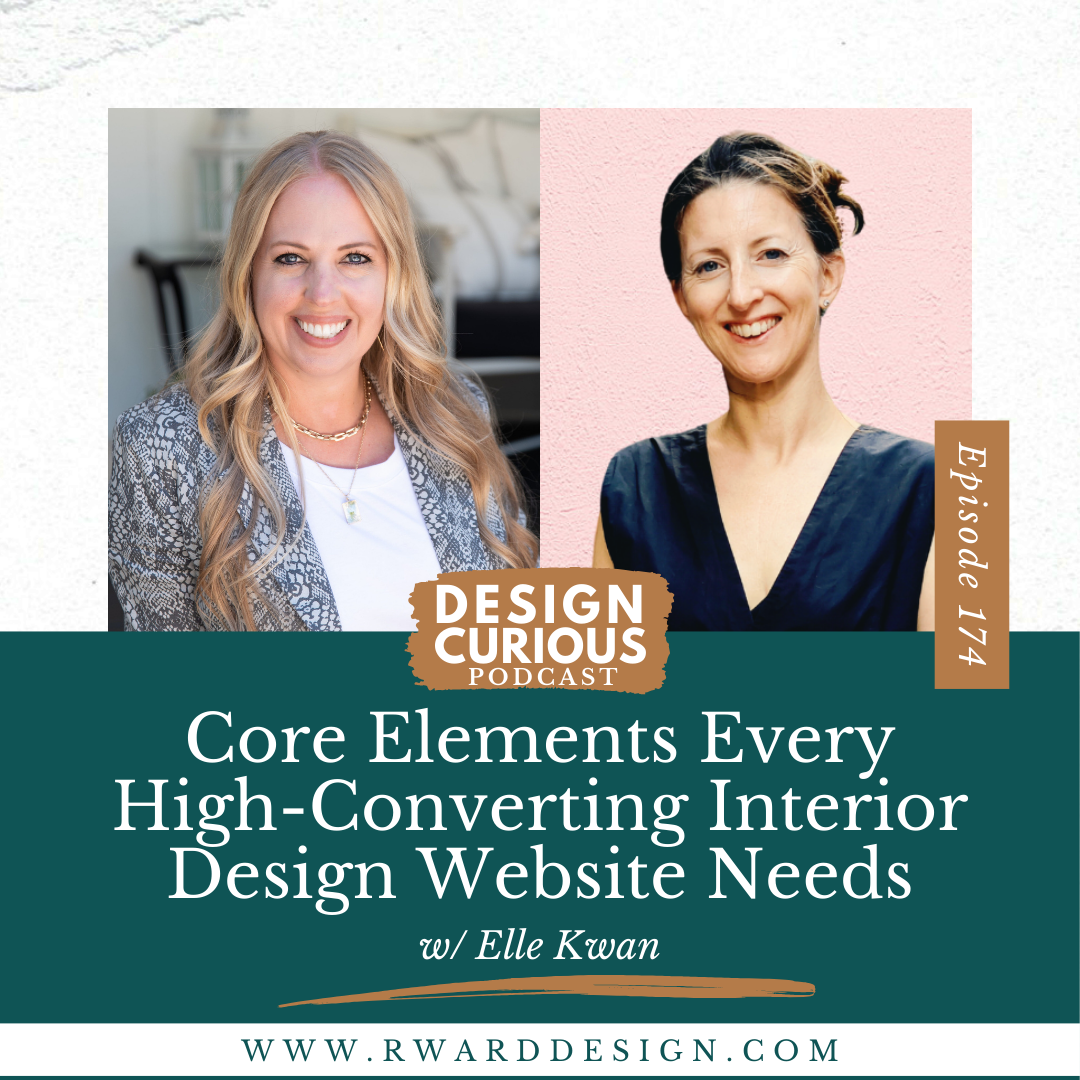
“A good website really should be qualifying your inquiries and increasing them as well.”
Does your website actually do that? Or does it simply exist as a gallery of pretty images while you continue to explain yourself over and over again in emails, DMs, and discovery calls?
If you’ve ever hesitated before sending someone your website link, or felt a little cringe when a potential client says they want to “check out your site,” this episode is for you.
Today, I’m sitting down with Elle Kwan to unpack what separates a beautiful website from a high-converting interior design website — one that supports your business, filters your inquiries, and reflects the true level of your work.
She shares about what should actually be on your website, the most common mistakes designers make with their online presence, and how to know when it’s time for a website redesign.
If you want your website to feel like a confident extension of your brand — and a tool you’re proud to share — you’ll want to listen closely.
What You’ll Learn in This Episode
Why most interior design websites fail to convert visitors into inquiries
The essential criteria of a high-converting website for interior designers
How storytelling, case studies, and testimonials build trust and authority
The difference between Instagram marketing and website strategy
Common website mistakes that create confusion and low-quality leads
When it’s time for a website redesign and how to recognize the signs
What questions to ask before hiring a website designer
Core Elements Every High-Converting Interior Design Website Needs
A high-converting website isn’t about chasing trends or copying another designer’s layout. It’s about clarity, intention, and connection.
Your website should support your business goals, communicate your value clearly, and attract the right clients — without requiring you to explain yourself repeatedly.
Here are the core elements every high-converting interior design website needs.
The Criteria of a High-Converting Website
Criteria #1: Clear strategy tied to business goals
A high-converting website starts with strategy, not aesthetics. The most effective websites are built around clear business goals — whether that’s booking consultations, qualifying inquiries, attracting press, or moving beyond referral-only work. Your website should answer one central question for visitors: Is this designer right for me?
Criteria #2: Story-driven project pages and case studies
High-converting websites pair beautiful imagery with context — explaining what the client needed, what challenges existed, and how the design solved them. Case studies, before-and-after narratives, and thoughtful project descriptions allow potential clients to imagine themselves in the experience. This combination of visuals and story builds trust, authority, and emotional connection.
Criteria #3: Client-focused messaging
Instead of centering the website around services and processes alone, effective websites speak directly to client needs, concerns, and desires. Visitors want to know how working with you will feel and whether you understand their goals.
Criteria #4: Design that reinforces your positioning
Your website’s design elements — layout, typography, pacing, and imagery — should visually communicate whether you work in luxury spaces, historic homes, bold color-forward interiors, or minimalist environments.
Common Website Mistakes Interior Designers Make
Mistake #1: Treating the website like a static portfolio
One of the biggest mistakes designers make is treating their website like a static portfolio instead of a living business asset. Pages filled with scrolling images but little explanation miss a huge opportunity to connect with potential clients who want guidance, reassurance, and clarity.
Mistake #2: Missing or unclear calls to action
Designers often feel hesitant about asking for the inquiry, but without clear next steps — book a consultation, get in touch, join the mailing list — visitors are left unsure of what to do. Even simple prompts can dramatically improve client engagement and inquiry quality.
Mistake #3: Outdated services or messaging
Many websites haven’t evolved alongside the designer. Services change, specialties deepen, and businesses grow — but the website stays stuck in the past. When your site no longer reflects who you are or what you offer, it creates confusion and extra work responding to the wrong inquiries.
Mistake #4: Lack of testimonials or transformation stories
Without social proof, visitors have to guess what it’s like to work with you. Testimonials and before-and-after narratives validate your expertise and experience.
Questions to Ask When Hiring a Website Designer
Question #1: Will I be able to manage and update my website myself?
Not all website designers are the right fit for interior designers. One of the most important questions to ask is how much control you’ll have once the site is complete. You should feel confident updating images, adding case studies, and making small changes without being locked into a retainer or relying on someone else for every tweak.
Question #2: Do you handle both website copy and design?
It’s also important to ask about scope and capability. Will they help with website copy and storytelling? Do they understand SEO for interior designers and how clients actually search for services? Can they align design elements with your brand positioning rather than offering a cookie-cutter solution?
Question #3: How will this website support my long-term goals?
A good website designer will ask about your growth plans, ideal clients, and future offerings — not just deliver a template-based solution.
Question #4: What does the process and communication look like?
A website project shouldn’t drag on endlessly or feel overwhelming. The best collaborations feel supportive, structured, and aligned with your goals — so your website becomes something you’re proud to share.
Signs It’s Time for a Website Redesign
Sign #1: You hesitate before sharing your website
If you feel even a flicker of embarrassment or hesitation when someone asks for your website, that’s one of the biggest indicators that it no longer reflects your level of work or where your business is headed.
Sign #2: Your services or offers have evolved
When your website still lists services you no longer offer — or doesn’t include new ones you do — it creates confusion and extra explanation in your inquiries. Your site should reduce friction, not add to it.
Sign #3: You’re getting the wrong type of inquiries
If people are contacting you about work you don’t want to take on, or misunderstanding how you work, your website messaging likely isn’t qualifying clients effectively.
Sign #4: Your website doesn’t feel like you anymore
As you grow, refine your aesthetic, or clarify your niche, your website should evolve alongside you. When it feels out of alignment, visitors can sense that disconnect.
Sign #5: You’re actively scaling or expanding your business
Adding team members, raising your rates, or expanding your offerings is often the right moment to reassess your website strategy so it supports the next phase of growth.
Sign #6: Your site is hard to update or manage
If making simple changes feels intimidating or requires outside help every time, your website will quickly become outdated — a clear sign it’s time for a redesign.
Final Thoughts
Your website should feel like a quiet partner in your business — working for you while you sleep, telling your story, and helping the right clients find their way to you.
When your online presence reflects your evolution, expertise, and values, it removes friction, builds confidence, and opens doors to opportunities you might otherwise miss.
Meet Elle Kwan
Elle Kwan is a website designer and copywriter who works with interior designers whose work deserves the spotlight but whose websites aren’t fully reflecting their expertise. With a background in journalism and luxury publishing, Elle brings together strategy, storytelling, and design to create elevated online presences that attract dream clients, larger budgets, and meaningful opportunities.
Connect With Elle Kwan
Website: Elle Kwan Studio
Instagram: @imellekwan
Your Next Steps
Join My Design Mentor for clarity, structure, and guidance to help you grow a profitable interior design business, without sacrificing your creativity.
Check Out Our Spotify Playlist!
Resources & Freebies
- My Design Mentor to kickstart a successful career in interior design!
- Furnishings Investment Guide
- Remodel Budget and Timeline Guide
- Your Roadmap to a Career in Interior Design
- 3 Things I Wish I had known when I Started my Career
- The best books every interior designer should have
Take a Quiz!
- Find Your Perfect Interior Design Style if you are curious about your design style
- Find Out What Type of Interior Designer You Should Be!
Let’s Connect!
- Email me at [email protected] if you have suggested topics
- DM me on Instagram at @rwarddesign if you have a burning question
Subscribe & Review!
If you love this episode, don’t forget to hit subscribe and leave me a rating & review! Click here.