
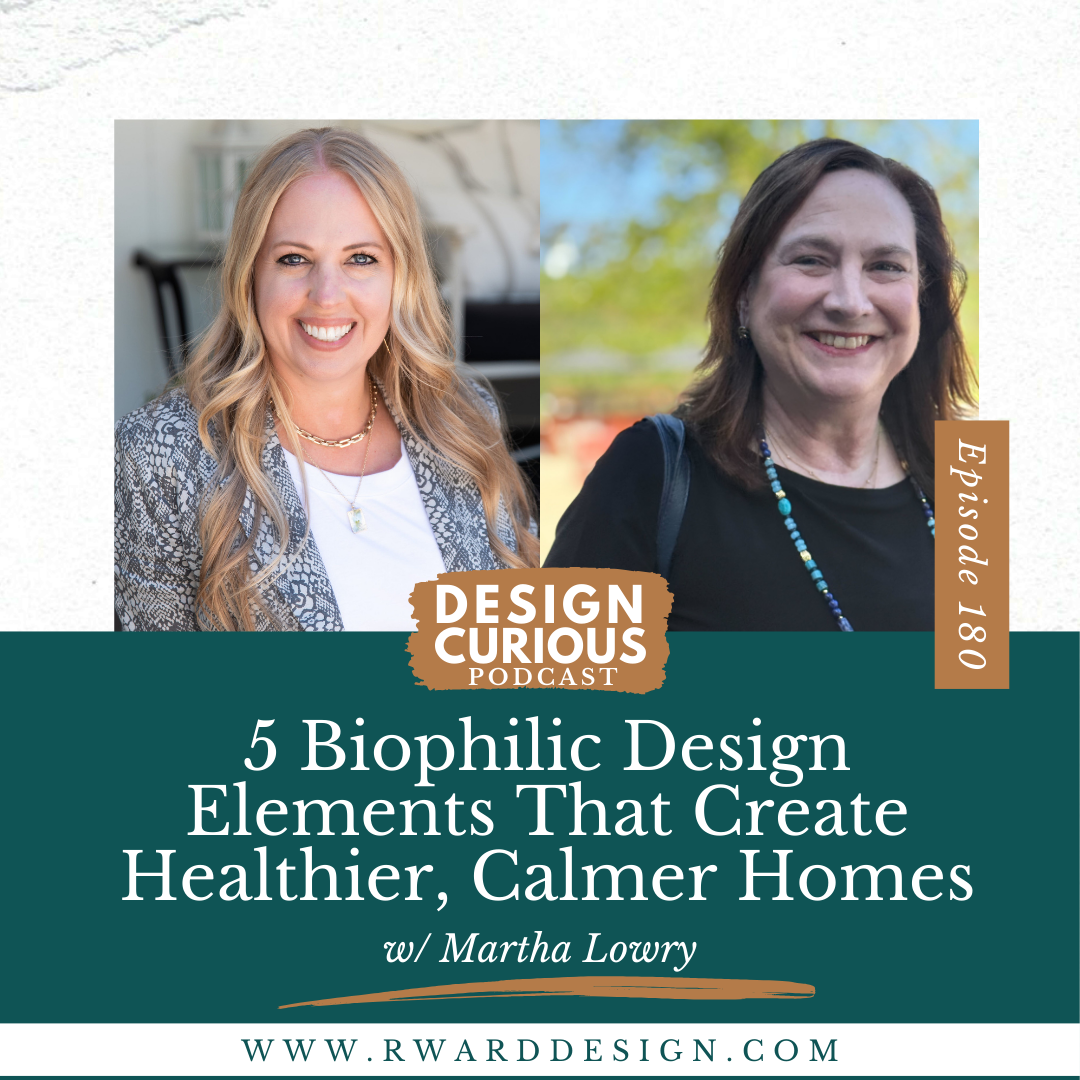
Have you ever walked into a space and immediately felt calmer, without knowing why? Or noticed how a room flooded with natural light just feels better to be in? That’s not an accident. It’s your nervous system responding to your environment, and it’s exactly why biophilic design matters more than ever in interior design today.
In this episode, I’m sitting down with returning guest and seasoned residential designer Martha Lowry to unpack what biophilic design really is — beyond the buzzword. We’re talking about how bringing elements of the natural environment indoors can dramatically improve emotional well-being, mental health, creativity, and even how clients experience their homes daily. This conversation is especially important for interior designers who want to design spaces that don’t just look beautiful, but truly support the people living in them.
If you’ve ever struggled to explain why certain design choices feel right — or you want to add more depth, science, and intention to your client communication — this episode will help you understand how natural light, plants, color psychology, organic shapes, and neuro-aesthetics work together to create homes that heal, calm, and inspire. Biophilic design isn’t about trends. It’s about designing with the human experience in mind.
What You’ll Learn in This Episode
What biophilic design is and why it matters
How natural light impacts mood, energy, and well-being
Using plants and materials to bring nature indoors
Color psychology and emotional responses in interior design
How designers apply biophilic principles for healthier homes
5 Biophilic Design Elements That Create Healthier, Calmer Homes
Biophilic design is not about adding more plants and calling it a day. It’s about intentionally designing interiors that reflect how humans naturally respond to the natural environment.
Below are some of the most impactful biophilic design elements Martha discussed, along with why they matter for homeowners and designers alike.
1| Natural Light as an Emotional Regulator
Natural light is one of the most powerful — and often underestimated — tools in interior design. As Martha explains, humans have an immediate emotional response to daylight. We feel more energized, more balanced, and more positive in spaces that allow sunlight to move freely throughout the day. This becomes especially important during darker seasons, when shorter days can negatively impact mood and mental health.
From a design standpoint, this often means reducing heavy window treatments, rethinking furniture placement, and layering artificial lighting that supports — rather than competes with — daylight. When designers prioritize natural light, they are actively supporting clients’ emotional well-being, even if clients can’t articulate why the space feels better.
2| Plants, Greenery, and Living (or Lifelike) Elements
Plants are often the first thing people associate with biophilic design, and for good reason. Whether live or high-quality silk, leafy, organic greenery helps bridge the gap between indoors and outdoors. Plants soften spaces, improve air quality (when live), and provide a visual reminder of nature — something our brains crave.
Martha emphasizes that biophilic design doesn’t require clients to become expert plant parents. Low-maintenance plants, succulents, air plants, and even fresh flowers can offer the same emotional benefits. The key is introducing life, movement, and softness into the interior environment in a way that feels accessible and sustainable for the homeowner.
3| Color Psychology and Nature-Inspired Palettes
Color plays a massive role in how we emotionally experience a space. In biophilic interiors, color choices are intentional — rooted in how we respond to the natural world. Blues and greens are particularly calming, while warm, earthy neutrals help spaces feel grounded rather than sterile.
As Martha points out, stark white interiors can often feel institutional or emotionally cold. By layering color inspired by landscapes, gardens, and seasons, designers can create spaces that feel comforting and restorative. This is where color psychology and neuro-esthetics intersect — understanding how the brain responds to beauty and balance.
4| Organic Shapes, Curves, and Natural Patterns
Nature rarely exists in straight lines, and neither should our interiors. Organic shapes, curves, and soft silhouettes feel more intuitive and welcoming than rigid, boxy forms. From curved furniture to floral wallpaper and nature-inspired textiles, these elements subtly echo the shapes we encounter outdoors.
We’re seeing a resurgence of botanical wallpapers, organic motifs, and flowing forms in trade publications — and for good reason. These details don’t need to dominate a space to be effective. Even small doses, like an accent wall or sculptural furniture piece, can dramatically shift how a room feels.
5| Emotional Connection and Personal Nature Stories
Perhaps the most important element of biophilic design is emotional connection.
As designers, we must understand that clients bring their histories, memories, and personal experiences into their homes. Someone who grew up near the ocean may feel deeply connected to coastal colors, while another may associate calm with mountains, forests, or desert landscapes.
Martha reminds us that biophilic design is about listening. By asking thoughtful questions and encouraging clients to reflect on what environments make them feel safe, happy, and at peace, designers can create spaces that resonate on a deeply personal level. This emotional intelligence is what transforms good design into meaningful design.
Final Thoughts
Biophilic design invites us to slow down and design with intention — not just for aesthetics, but for human well-being. When we understand how natural light, plants, materials, color, and organic shapes affect emotional response, we elevate our work and deepen the value we bring to our clients. This approach isn’t about following a trend; it’s about designing homes that truly support life, creativity, and mental health.
Meet Martha Lowry
Martha Lowry is a residential interior designer with over three decades of experience and a unique balance of analytical and creative expertise. She holds a Bachelor of Arts in Mathematics and a Bachelor of Arts in Interior Design, and she is a member of the Design Leaders Collective. Based in North Carolina, Martha’s work focuses on creating emotionally supportive, beautifully intentional homes rooted in biophilic design, neuro-esthetics, and a deep understanding of how people experience space.
Connect With Martha Lowry
Website: Design of the Times
Your Next Steps
If you want to bring more depth, confidence, and clarity into your design process — and learn how to communicate the why behind your design decisions — I’d love to support you inside My Design Mentor. It’s where I help interior designers build expertise, refine client communication, and grow sustainable, fulfilling creative careers.
👉 Join My Design Mentor and take your next step as a designer.

Check Out Our Spotify Playlist!



Resources & Freebies
- Furnishings Investment Guide
- Remodel Budget and Timeline Guide
- Your Roadmap to a Career in Interior Design
- 3 Things I Wish I had known when I Started my Career
- The best books every interior designer should have
Take a Quiz!
- Find Your Perfect Interior Design Style if you are curious about your design style
- Find Out What Type of Interior Designer You Should Be!
Let’s Connect!
- Email me at [email protected] if you have suggested topics
- DM me on Instagram at @rwarddesign if you have a burning question
Subscribe & Review!
If you love this episode, don’t forget to hit subscribe and leave me a rating & review! Click here.