
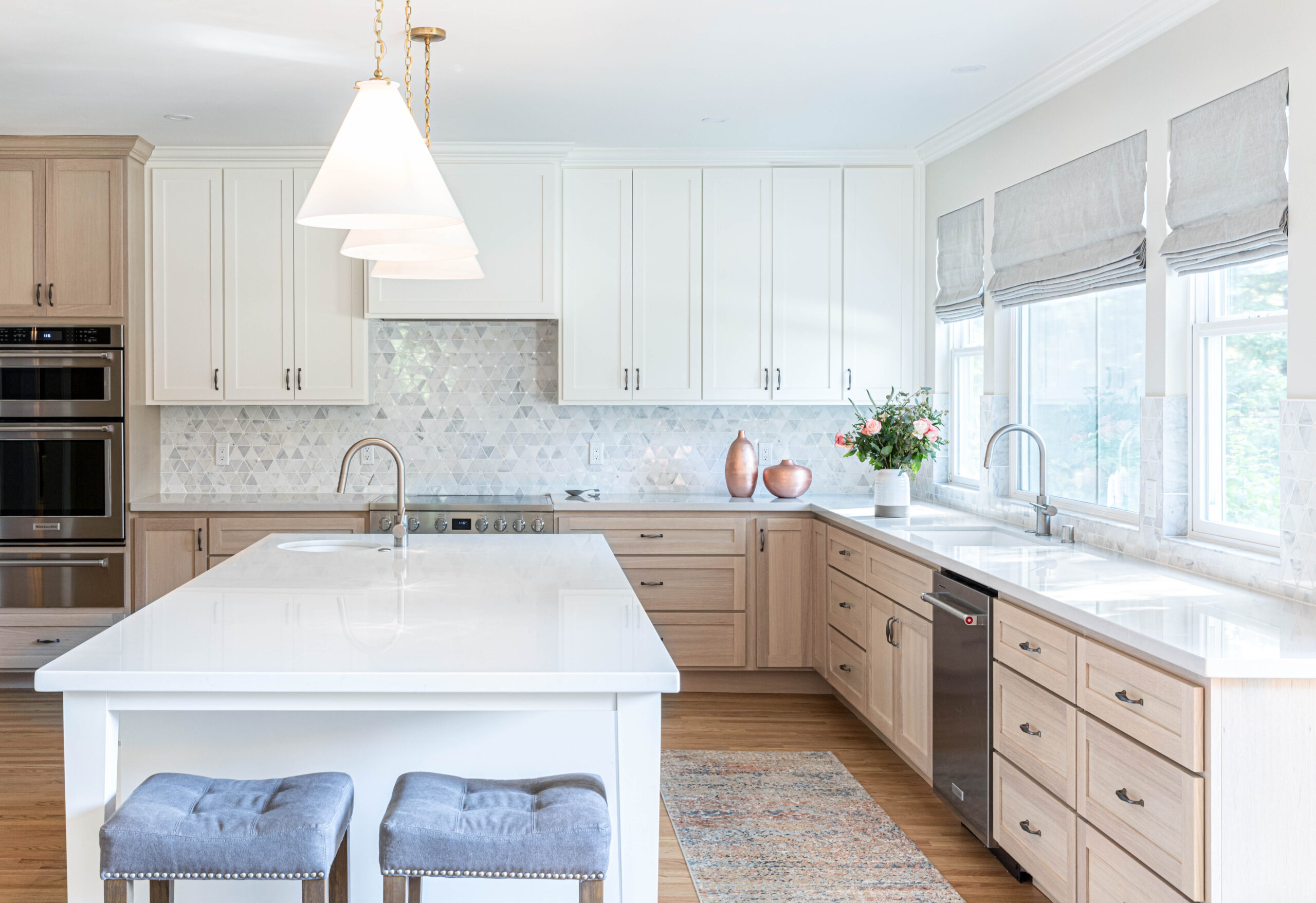
Choosing the right countertop material is one of the most impactful decisions you’ll make in a kitchen or bathroom design. Countertops aren’t just work surfaces—they define the look, feel, and functionality of your space. With so many options available, understanding the pros and cons of each material can help you make a confident, long-lasting choice. So, let’s break down the options to see which might be the best for you!
1. Quartz
Quartz countertops are engineered from natural quartz crystals combined with resins. The result is a non-porous surface that mimics the look of stone without the upkeep. There are numerous style options out there, so no matter what your design style is, there is a perfect slab for you! We use quartz in most of our clients’ projects, and have never had a problem with it. The trick is to use a reputable company, like Cosentino or Cambria, and not a cheap imported quartz, so you don’t have quality issues down the road.
Pros:
- No sealing required (low maintenance)
- Stain and scratch-resistant
- Wide variety of colors and styles
Cons:
- Less heat-resistant than natural stone (don’t put a hot pan directly onto the surface!)
- Not as “natural” in appearance for some tastes
2. Quartzite
Quartzite is a natural stone formed from sandstone under intense heat and pressure, resulting in a dense, highly durable surface with marble-like veining. Because it is a natural material, no two slabs are the same, making each one naturally beautiful. It’s often considered a “best of both worlds” option—combining the beauty of marble with the toughness of granite.
Pros:
- Hard and scratch-resistant (often harder than granite!)
- Naturally heat-resistant and UV-resistant, so it won’t fade in sunlight
- Unique, natural patterns similar to marble
Cons:
- Porous—requires sealing to prevent stains
- Limited color range compared to engineered materials
3. Granite
Granite has been a go-to choice for decades. This natural stone offers unique patterns, rich colors, and excellent durability. It resists heat well and, when sealed properly, can handle everyday wear and tear with ease.
Pros:
- Highly durable and heat-resistant
- Unique, natural patterns
Cons:
- Requires periodic sealing
- Associated with a specific design time period, so it can feel “dated”
4. Marble
Marble is synonymous with luxury and is our first thought when a client mentions they want a “timeless” design. Its soft veining and classic appeal make it a favorite for high-end kitchens and bathrooms. However, it is known for being a soft material, so it can stain or scratch easily.
Pros:
- Beautiful, high-end appearance
- Naturally cool surface (great for baking)
Cons:
- Prone to scratching and staining
- Requires regular maintenance
- Typically more expensive
5. Porcelain
Porcelain is a pottery material that has been used for centuries but has only recently become a popular countertop material. It is a manufactured stone, but patterns and colors are added during the fabrication process to mimic marble and other natural stone materials. Porcelain countertops are highly durable, non-porous, and heat-resistant surfaces, but can crack under blunt force.
Pros:
- Scratch and stain-resistant
- Low maintenance, non-porous material
- UV-resistant, so it won’t fade in sunlight
Cons:
- Can chip under heavy or blunt forces
- Requires a highly skilled fabricator, so you need to find the right fabricator for the job
A Note on Butcher Block and Concrete
Wood countertops, often referred to as butcher block, bring warmth and natural texture into a space. They’re especially popular in farmhouse and rustic designs. They can be sanded and refinished, but with that being said, it is a high-maintenance choice. It requires regular sealing and oiling and is susceptible to water damage and scratches. It can also harbor bacteria if not maintained properly. For these reasons, we typically advise against it, even though it looks beautiful when installed.
The same often goes with concrete. Concrete countertops are a favorite in contemporary and industrial-style homes as they can be custom-poured to fit any shape and tinted to match a wide range of colors. They are durable when sealed, but require sealing regularly and can crack over time. It is also heavy and is a labor-intensive installation.
Final Thoughts
The best countertop material depends on your priorities—whether that’s budget, aesthetics, durability, or maintenance. If you love natural beauty and don’t mind regular upkeep, stone options like granite or marble may be ideal. If convenience is key, quartz or porcelain are excellent choices.
Take time to consider how you use your space day-to-day. A beautiful countertop is important—but one that fits your lifestyle is essential.
XOXO,