
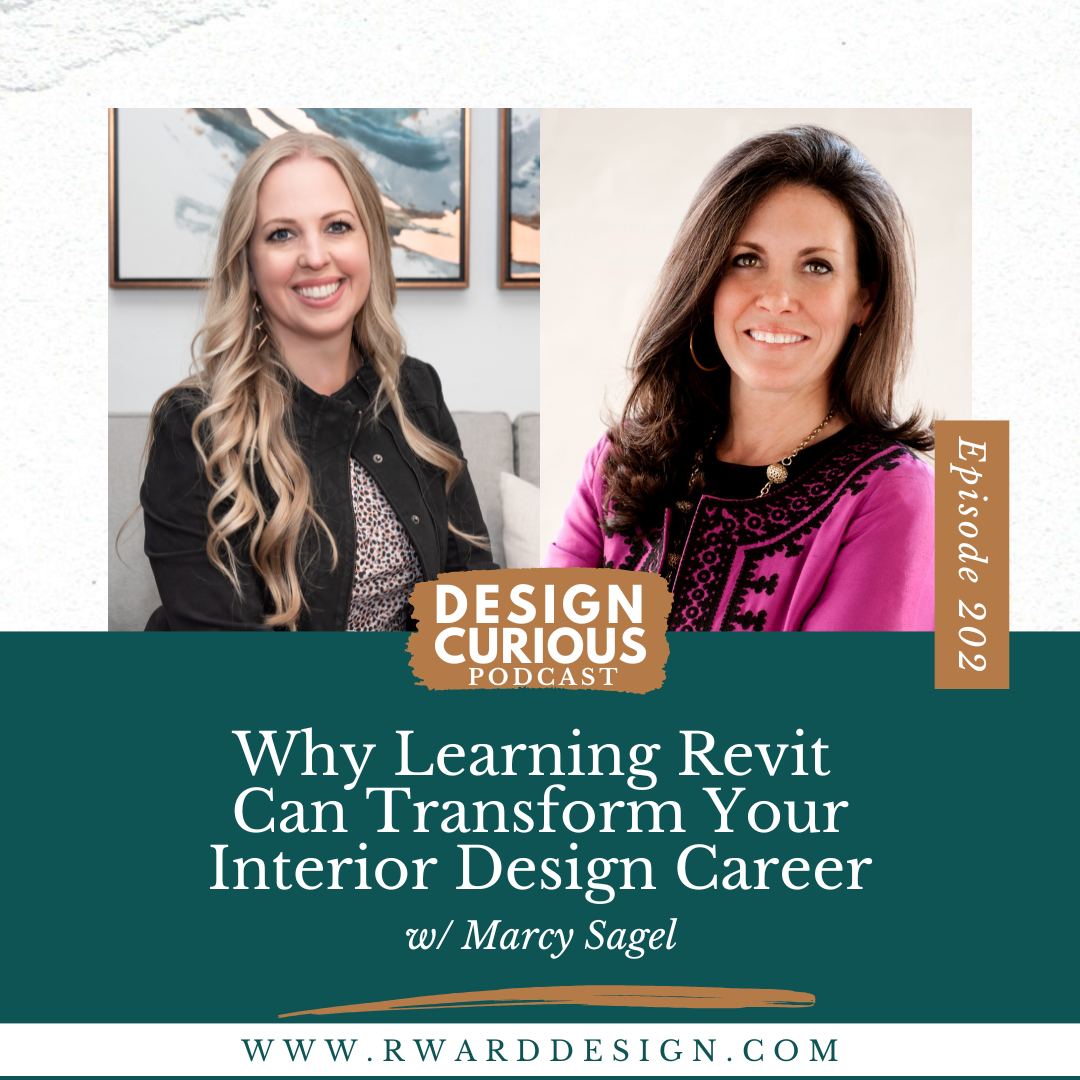
Are you intimidated by Revit?
I hear from so many interior designers who are curious about commercial design, multifamily housing, student housing, senior living, or hospitality projects, but feel held back because they don’t have the technical skills employers are asking for. And honestly, that hesitation can keep talented designers from pursuing opportunities they’d genuinely love.
In this episode, I’m joined by Marcy Sagel, creator of Designer Bank, an online learning platform that helps interior designers strengthen their technical and commercial design skills. Marcy shares why Revit has become one of the most valuable skills a designer can learn, how rendering tools like Enscape can dramatically increase your marketability, and why commercial firms are actively looking for designers who can work confidently in these programs.
What I love most about this conversation is that it’s not about becoming a tech expert overnight. It’s about expanding your opportunities. Whether you’re a residential designer curious about commercial projects, a student preparing for interviews, or a designer who feels “rusty” in Revit, this episode will help you see how strengthening your technical skill set can open doors, increase your confidence, and make you more competitive in today’s interior design industry.
What You’ll Learn in This Episode
Why Revit matters for commercial interior design careers
How rendering skills increase your marketability
What commercial firms look for when hiring
How online Revit training fills industry gaps
Future trends in multifamily and commercial design
How Revit Can Make You More Marketable As An Interior Designer
One of the biggest themes in this conversation is that technical skills create career opportunities. Here are the lessons I want every designer to take away from Marcy’s experience.
1. Learn the Software Commercial Firms Actually Use
If you’re interested in commercial interior design, multifamily housing, student housing, senior living, or hospitality projects, Revit is quickly becoming a non-negotiable skill. Marcy explained that many firms have moved almost entirely away from CAD because they need to collaborate directly with architects in a shared Revit environment.
“If you can work in Revit, you can get yourself a job.” — Marcy Sagel
That’s a powerful reminder that learning the right software can dramatically expand your career options.
2. Rendering Skills Help Clients Say Yes
One of my favorite parts of the conversation was hearing how Marcy’s team now handles rendering in-house using Enscape. Instead of asking clients to imagine a finished space, designers can show them a highly realistic visualization.
“When you look at something that you’ve rendered in Enscape… it looks like the end photo that we take at the end.” — Marcy Sagel
For both residential and commercial designers, strong rendering skills can improve presentations, increase client confidence, and help projects move forward faster.
3. Build Skills Before You Apply for the Job
Many designers assume they need years of experience before they can move into commercial work. Marcy believes the opposite: develop the skills first, then pursue the opportunity.
“Designer Bank gives you an opportunity to get that skill set before you actually go to work for someone.” — Marcy Sagel
This is especially encouraging for students, career changers, and residential designers who want to transition into larger-scale projects.
4. Don’t Wait Until You Feel Like a ‘10’
One of the most refreshing things Marcy said was that no one is truly a 10 in Revit. The software is simply too deep and constantly evolving.
“No one is a 10… there’s so much to learn in Revit that there’s just absolutely no one who knows everything about it.” — Marcy Sagel
So if you’ve been avoiding Revit because you’re afraid of not being “good enough,” let this be your permission to start learning anyway.
5. Stay Curious About Future Technology
We also talked about AI integration and the future of design technology. While commercial projects are still highly technical and code-driven, Marcy sees AI becoming increasingly useful alongside tools like Revit and Enscape.
“The most amount of skills that you can learn and gain for yourself make you a better designer.” — Marcy Sagel
That mindset—continuous learning—is what keeps designers adaptable and relevant in a changing industry.
Final Thoughts
My biggest takeaway from this conversation is simple: learning Revit isn’t about becoming a software expert—it’s about creating more opportunities for yourself as a designer.
Whether you want to stay in residential design, explore commercial projects, work on multifamily developments, or simply become more competitive in interviews, adding technical skills like Revit, rendering, space planning, and visualization can significantly strengthen your career. The designers who continue learning are often the ones who discover entirely new paths they never expected.
Meet Marcy Sagel
Marcy Sagel is the creator of Designer Bank, an online learning platform that helps interior designers strengthen their technical and commercial design skills. She is also the founder and principal of MSA Interiors, a leading commercial interior design firm specializing in multifamily housing, student housing, senior living, affordable housing, and other complex commercial projects. With more than 30 years of industry experience, Marcy has built a reputation for creating innovative, functional, and aesthetically compelling spaces that align with her clients’ strategic goals.
Connect With Marcy Sagel
Website: Designer Bank
Instagram: @Designer_Bank
Your Next Steps
If you’re ready to gain clarity about your creative career, build confidence in your skills, and receive mentorship from someone who’s navigated both sides of the employee-employer relationship, I’d love to invite you to join My Design Mentor.
Inside the program, you’ll find educational modules, coaching opportunities, career guidance, and a supportive community designed specifically for aspiring and emerging interior designers. Whether you’re exploring your first design job or building your own business, you’ll gain the tools and support to move forward with confidence.
Join My Design Mentor and start creating a career you truly love.

Check Out Our Spotify Playlist!
Resources & Freebies
- Free webinar, “From Passion to Profit,” and learn the 5 Money Moves to start your interior design business right
- Your Roadmap to a Career in Interior Design
- Furnishings Investment Guide
- Remodel Budget and Timeline Guide
- 3 Things I Wish I had known when I Started my Career
- The best books every interior designer should have
Take a Quiz!
- Find Your Perfect Interior Design Style if you are curious about your design style
- Find Out What Type of Interior Designer You Should Be!
Let’s Connect!
- Email me at [email protected] if you have suggested topics
- DM me on Instagram at @rwarddesign if you have a burning question
Subscribe & Review!
If you love this episode, don’t forget to hit subscribe and leave me a rating & review! Click here.