
Have you ever stood in front of dozens of paint swatches wondering why two “neutral” colors look completely different on the wall? Understanding undertones is one of the most challenging aspects of interior design—even for experienced designers.
Many homes today are filled with gray furniture, gray walls, and gray finishes, yet they still feel flat, cold, or unfinished. The missing piece? A deeper understanding of color theory, undertones, and how to layer color intentionally.
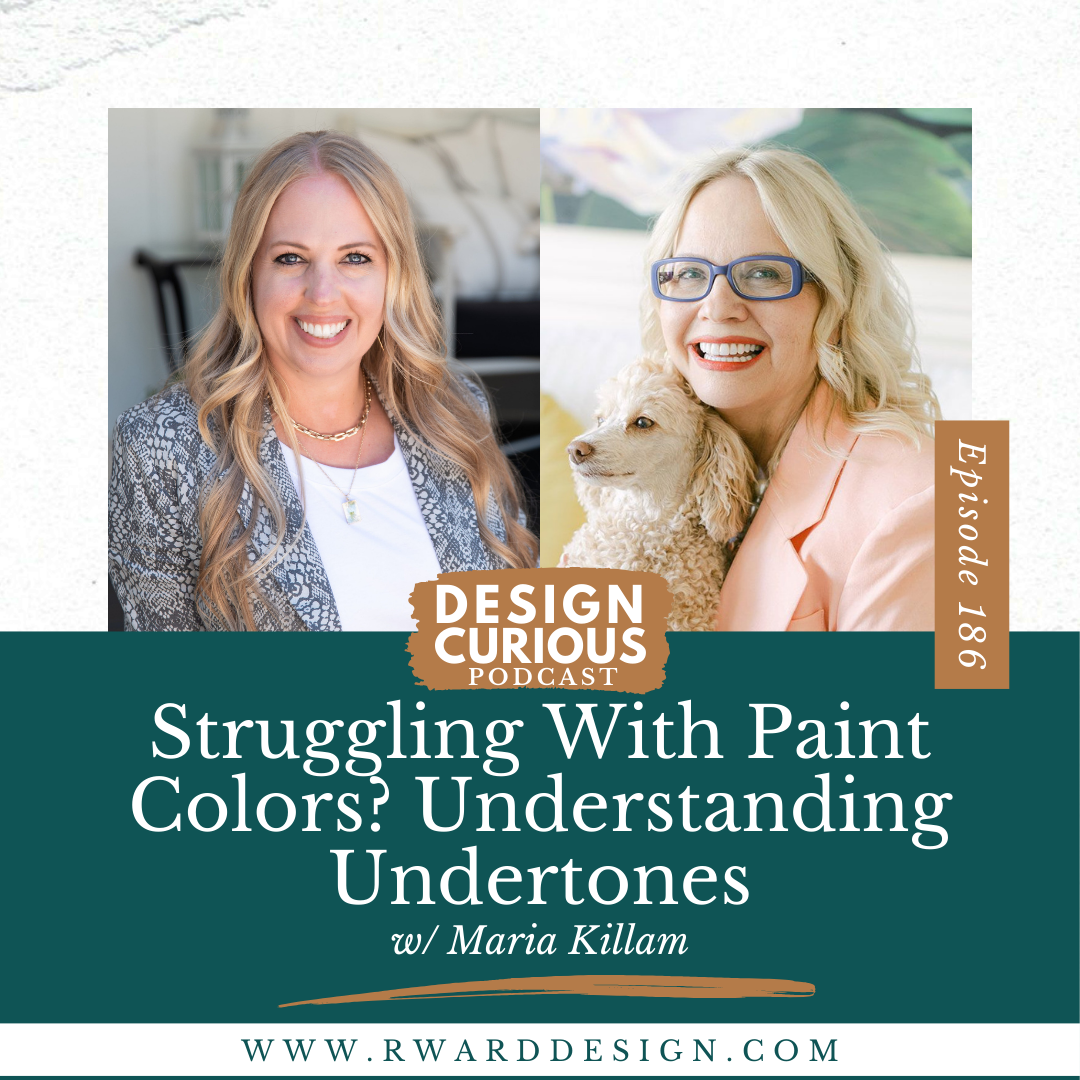
In this episode, I sit down with internationally recognized color expert Maria Killam to talk about how interior designers and homeowners can finally make sense of undertones and neutral colors. Maria has spent decades helping people avoid costly renovation mistakes by learning how color actually works in real homes—not just in theory. Her system for understanding undertones helps designers create timeless spaces filled with personality, warmth, and cohesion.
If you’re an interior designer who struggles with choosing the right neutral paint colors, selecting finishes that flow from room to room, or bringing life back into a gray room, this conversation will help you see color in a completely new way.
What You’ll Learn in This Episode
How undertones determine the success of neutral colors
Why gray interiors need color to feel alive
The difference between warm and cool neutral palettes
How to identify undertones in paint and finishes
Simple ways to add color to gray rooms
How to Use Undertones to Transform Gray Interiors
Color can feel intimidating, even for interior designers. Many designers are comfortable selecting furniture, layouts, and materials, but color selection often feels like guesswork. The truth is that color becomes much easier when you understand undertones and how they interact with the rest of the finishes in a space.
In my conversation with Maria, she breaks down some powerful ideas about color that every interior designer should understand. If you want to create timeless interiors that feel cohesive and vibrant, these principles will change the way you approach color in your design projects.
Tip #1: Learn to Identify Undertones First
One of the biggest mistakes designers make is treating neutral colors as if they’re interchangeable. In reality, most neutral paint colors have very specific undertones—and those undertones dramatically affect how a space feels.
Maria explains that many homeowners notice something feels “off” in a room but can’t identify why. Often, the problem is that the undertones of the finishes don’t match. A beige paint color might have pink undertones, while the tile or flooring might lean green. When these undertones clash, the room loses its harmony.
Maria developed a system for identifying undertones after years of doing color consultations and noticing that the same neutral colors kept working again and again. Through thousands of consultations and more than 20,000 homes, she began to see patterns in which neutrals worked best in real spaces.
For interior designers, the lesson is simple: before choosing a neutral paint color, step back and identify the undertones already present in the room. Look closely at flooring, countertops, cabinetry, and tile. Once you identify those undertones, selecting the right neutral becomes far easier.
Tip #2: Use Color to Bring Gray Rooms to Life
Over the past decade, gray has dominated interior design. Many homes now have gray walls, gray sofas, gray rugs, and gray finishes. While gray can create a calm backdrop, it often leaves rooms feeling flat and lifeless.
Maria sees this problem constantly when reviewing submissions for her one-day makeover projects. She explains that many homeowners assume they need a full renovation when their room feels dated or dull. In reality, the problem is usually much simpler: the space just needs color and creativity.
Nothing brings gray to life faster than adding color. A gray room can instantly feel warm and inviting when you layer in colorful accents, artwork, textiles, or decorative elements. Even subtle additions like patterned pillows, warm-toned throws, or statement artwork can shift the energy of the space.
For interior designers, this is an important reminder: color doesn’t always require a full redesign. Often, the most impactful transformations come from thoughtfully introducing color into an otherwise neutral environment.
Tip #3: Understand the Three Characteristics of Color
One of Maria’s most helpful teaching frameworks is the idea that every color can be described in three ways. According to her system, all colors fall into three categories:
- Light or dark
- Clean or dirty
- Cool or warm
Understanding these characteristics helps designers evaluate colors more objectively. Instead of guessing whether a color will work in a space, you can analyze it through these three attributes and compare it with the finishes already in the room.
For example, a color that is warm, muted, and medium-toned will behave very differently from a color that is cool, bright, and light. These distinctions become especially important when designing rooms that need visual flow from one space to another.
Maria emphasizes that once designers learn to recognize these traits, creating cohesion throughout a home becomes much easier. Instead of randomly selecting colors, you can build a palette that maintains harmony from room to room.
Tip #4: Choose Neutral Finishes for Timeless Design
Another major theme in our conversation is the importance of timeless design choices, especially when it comes to permanent finishes.
Many homeowners say they want a timeless home, but then choose trending materials heavily because they see them online. The problem with trends is that they often look beautiful in high-budget inspiration photos but can feel overwhelming or mismatched when recreated on a smaller scale.
Maria explains that homeowners frequently fall into the trap of installing “bossy neutrals”—materials that dominate the room and limit future design flexibility. Once a bold countertop, busy tile, or highly patterned finish is installed, the entire room must revolve around that choice.
Instead, Maria recommends keeping permanent finishes simple and neutral whenever possible. Classic whites, creams, and subtle materials allow the rest of the room to evolve. With a neutral foundation, designers can easily refresh a space through paint, textiles, accessories, or artwork without needing a full renovation.
This approach not only creates timeless interiors but also supports sustainable design. When homes don’t need to be renovated every decade to keep up with trends, less material ends up in landfills.
Tip #5: Don’t Let Trends Replace Good Design
Interior design trends come and go, but great design principles remain constant. One of Maria’s biggest concerns is that many homeowners—and even designers—rely too heavily on trending inspiration images when planning renovations.
The problem is that these images often come from large-budget projects where materials, scale, and craftsmanship are very different from what homeowners can realistically achieve. When people try to replicate those designs without the same resources, the results often fall short.
Instead of chasing trends, Maria encourages designers to focus on balance, cohesion, and color harmony. When you understand undertones and build a thoughtful palette, your designs will feel intentional rather than trend-driven.
The most beautiful homes are rarely the trendiest ones. They’re the spaces where color, texture, and materials work together naturally.
Final Thoughts
Color can feel overwhelming at first, but once you understand undertones, everything begins to make sense. As Maria explains in this episode, great interior design isn’t about memorizing color theory formulas—it’s about learning how colors behave in real homes. When you learn to recognize undertones, evaluate neutrals, and introduce color thoughtfully, you gain the confidence to design spaces that feel balanced, warm, and timeless.
Meet Maria Killam
Maria Killam is an internationally recognized color expert, design educator, and author known for her groundbreaking system for understanding undertones. Through her blog Color Me Happy, her True Colour Expert Training program, and her design consultations, Maria has taught thousands of designers and homeowners how to choose paint colors, finishes, and materials with confidence. Her mission is to help people avoid costly renovation mistakes and create timeless, joyful homes filled with personality and color.
Connect With Maria Killam
Website: https://mariakillam.com
Instagram: @mariakillam
Blog: Color Me Happy
YouTube: Maria Killam Channel
Your Next Steps
If you’re ready to build a successful career in interior design and gain confidence in areas like color selection, client communication, and design strategy, I’d love to support you inside My Design Mentor.
This program is designed specifically for aspiring and emerging interior designers who want personalized business support, proven systems, and clarity around their next steps. Instead of figuring it out alone, you’ll gain mentorship, strategy, and a roadmap for sustainable growth.
👉 Join My Design Mentor and build your business the right way, without wasting years in trial and error.

Check Out Our Spotify Playlist!



Resources & Freebies
- Free webinar, “From Passion to Profit,” and learn the 5 Money Moves to start your interior design business right
- Your Roadmap to a Career in Interior Design
- Furnishings Investment Guide
- Remodel Budget and Timeline Guide
- 3 Things I Wish I had known when I Started my Career
- The best books every interior designer should have
Take a Quiz!
- Find Your Perfect Interior Design Style if you are curious about your design style
- Find Out What Type of Interior Designer You Should Be!
Let’s Connect!
- Email me at [email protected] if you have suggested topics
- DM me on Instagram at @rwarddesign if you have a burning question
Subscribe & Review!
If you love this episode, don’t forget to hit subscribe and leave me a rating & review! Click here.