
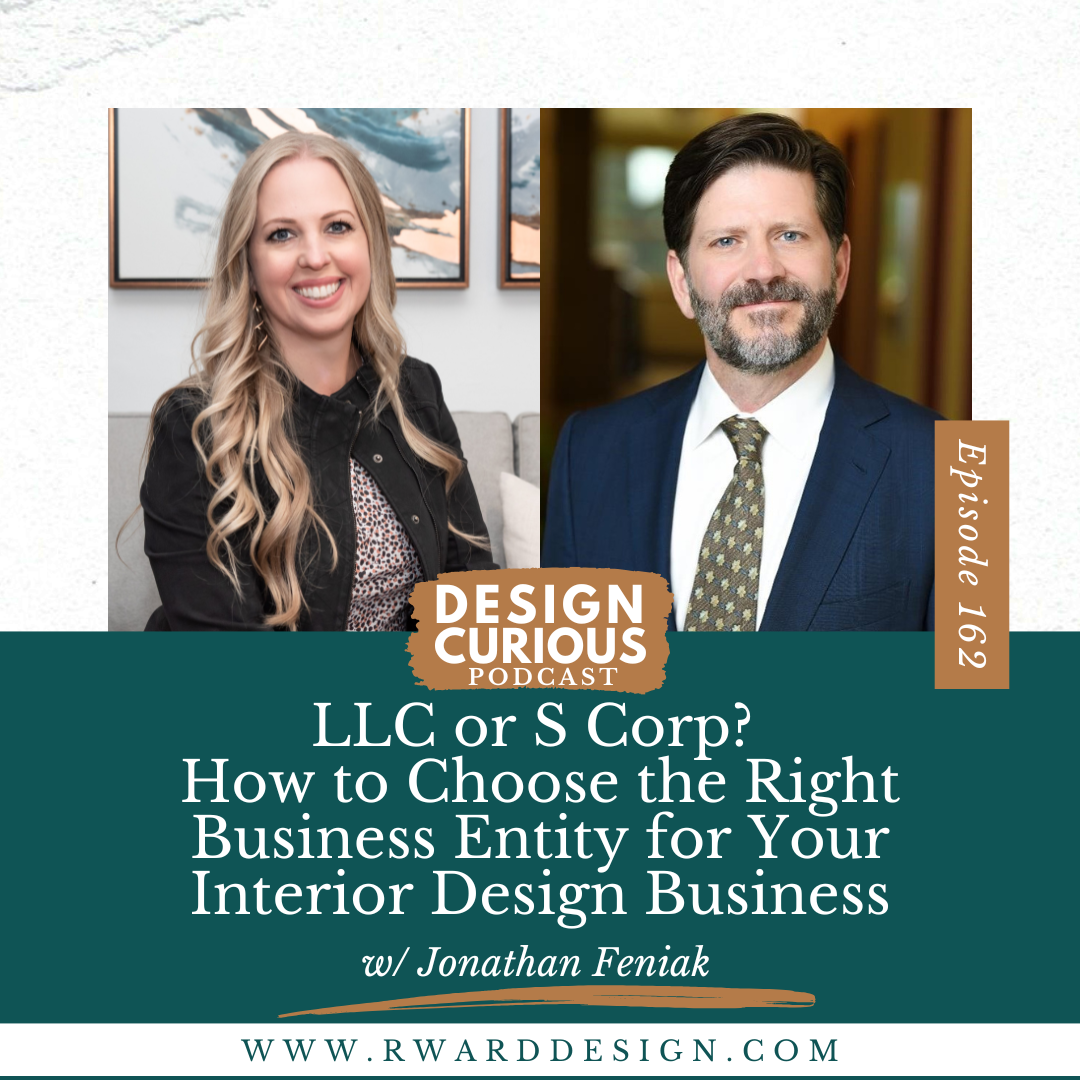
Starting an interior design business is exciting—but if you’re like most designers, the legal side of things can feel overwhelming. Should you stay a sole proprietor, form an LLC, or register as an S Corp? What does any of that even mean for your taxes, liability, or peace of mind?
In this episode, I sit down with Jonathan Feniak, attorney and co-founder of LLCAttorney.com, to talk about how to choose and form the right business entity for your interior design business. Jonathan breaks down the legal side of starting and running a design firm, explaining how to protect yourself with the proper business structure and why liability protection and insurance are essential for every designer. He also walks us through the natural progression many creatives take, from sole proprietorship to forming an LLC or S Corp, and how to know when it’s time to make that shift.
Whether you’re just starting your design journey and ready to set up your business the right way, or you’re an established designer questioning whether your current setup still fits, this episode will help you get clear and confident. You’ll walk away knowing exactly how to protect your assets, stay legally compliant, and make smarter financial decisions for your interior design business.
What You’ll Learn in This Episode
The difference between a sole proprietorship, LLC, and S Corp—and how each affects your taxes and liability
Why insurance often matters more than your business entity when you’re just starting out
How to know when it’s time to switch from a sole proprietor to an LLC or S Corp
Why forming an LLC can make your design business look more professional and credible
The most common mistakes designers make when setting up their businesses legally
Simple steps to stay compliant and protect your personal assets
How to avoid piercing the corporate veil and losing your liability protection
Choosing the Right Business Setup for Your Interior Design Business
Running a creative business doesn’t just require great design skills. It also takes legal and financial wisdom. Here’s a quick breakdown of what Jonathan and I discussed in the episode and how you can apply these lessons to your own design business.
1. Start Simple but Stay Smart
Most interior designers begin as sole proprietors, and that’s perfectly fine when you’re just testing the waters. In this stage, your risk is low, especially if you’re working on small projects for friends or family. However, as soon as your work expands, your exposure to liability increases.
Jonathan emphasizes that your business structure should always match your level of risk. Before worrying about LLC formation, invest in business insurance. Platforms like Thimble even allow you to buy short-term coverage for individual projects. This way, you’re protected while you figure out your next steps toward formalizing your business.
2. Why an LLC Is the Best Starting Point
Once your projects become larger and involve contracts, subcontractors, or clients beyond your personal circle, it’s time to form an LLC (Limited Liability Company).
An LLC protects your personal assets—like your home and savings—if your business ever gets sued. It also makes your business appear more credible to clients, partners, and vendors. Plus, it’s much easier to manage than a full corporation.
Unlike corporations, which require complex hierarchies of shareholders, directors, and officers, a member-managed LLC allows you to be the sole decision-maker. You simply maintain basic records, sign contracts under your business name, and respect the legal separation between you and your company.
Pro Tip: Keep at least three to six months of working capital in your business bank account to prove your LLC isn’t just a “shell company.”
3. When an S Corp Makes Sense
As your income grows, you may want to consider electing S Corp tax classification for your LLC. The IRS allows an LLC to be taxed as an S Corporation, which can save you thousands in taxes once you’re earning a steady profit.
Here’s how it works: you split your income into two parts:
- A reasonable salary (which is taxed like regular income)
- Remaining profits, which aren’t subject to self-employment taxes
This setup can save you roughly 15.3% on Social Security and Medicare taxes. However, Jonathan cautions that you shouldn’t jump into S Corp status too early. It’s best suited for designers who make a consistent income and are ready to handle payroll and more complex bookkeeping.
4. The Right Way to Sign Contracts
If your contracts or invoices only list your personal name, you’re personally liable. To maintain your limited liability protection, ensure that all contracts and payments are processed through your LLC.
Always sign documents as:
[Your Business Name], LLC, DBA [Your Brand Name]
By: [Your Name], Member/Manager
This small detail legally separates you from your company, ensuring your personal assets stay protected.
5. Stay Compliant with Smart Habits
Having an LLC isn’t a one-time setup. It’s an ongoing commitment to business compliance. Maintain clear records of important decisions (like hiring subcontractors), and keep your business and personal finances separate.
Jonathan recommends keeping meeting minutes for any significant decision that could result in liability. For example, if you hire a contractor, document how you vetted their license and insurance. This demonstrates “business judgment,” protecting you if something ever goes wrong.
Example: If a hired electrician causes damage, your documented due diligence shows you made a responsible business decision, reducing your legal exposure.
Final Thoughts
The legal and financial foundation of your design business matters as much as your creative vision. Whether you’re forming your first LLC or considering switching to an S Corp, understanding how to protect your business can save you from costly mistakes down the road.
Take the time to assess your level of risk, get insurance, and then choose the business structure that supports your growth. As Jonathan shared, it’s not about making things complicated. It’s about matching your structure to your stage of business and setting yourself up for long-term success.
About the Guest:
Jonathan Feniak is the lead attorney behind LLCAttorney.com, a company dedicated to making quality legal guidance accessible to small business owners. Specializing in LLC formation, business compliance, and asset protection, Jonathan helps entrepreneurs create strong legal foundations that empower their businesses to thrive. With decades of experience across finance, operations, and law, he combines real-world business insight with expert legal advice to simplify complex legal decisions for creatives and entrepreneurs.
Connect with Jonathan Feniak:
Website: LLCAttorney.com
YouTube: LLC Attorney Official Channel
Your Next Steps
Join the waitlist for Launch Your Business Bootcamp 👉 https://rwarddesign.myflodesk.com/launch-your-business-bootcamp
Check Out Our Spotify Playlist!
Resources & Freebies
- My Design Mentor to kickstart a successful career in interior design!
- Furnishings Investment Guide
- Remodel Budget and Timeline Guide
- Your Roadmap to a Career in Interior Design
- 3 Things I Wish I had known when I Started my Career
- The best books every interior designer should have
Take a Quiz!
- Find Your Perfect Interior Design Style if you are curious about your design style
- Find Out What Type of Interior Designer You Should Be!
Let’s Connect!
- Email me at [email protected] if you have suggested topics
- DM me on Instagram at @rwarddesign if you have a burning question
Subscribe & Review!
If you love this episode, don’t forget to hit subscribe and leave me a rating & review! Click here.