
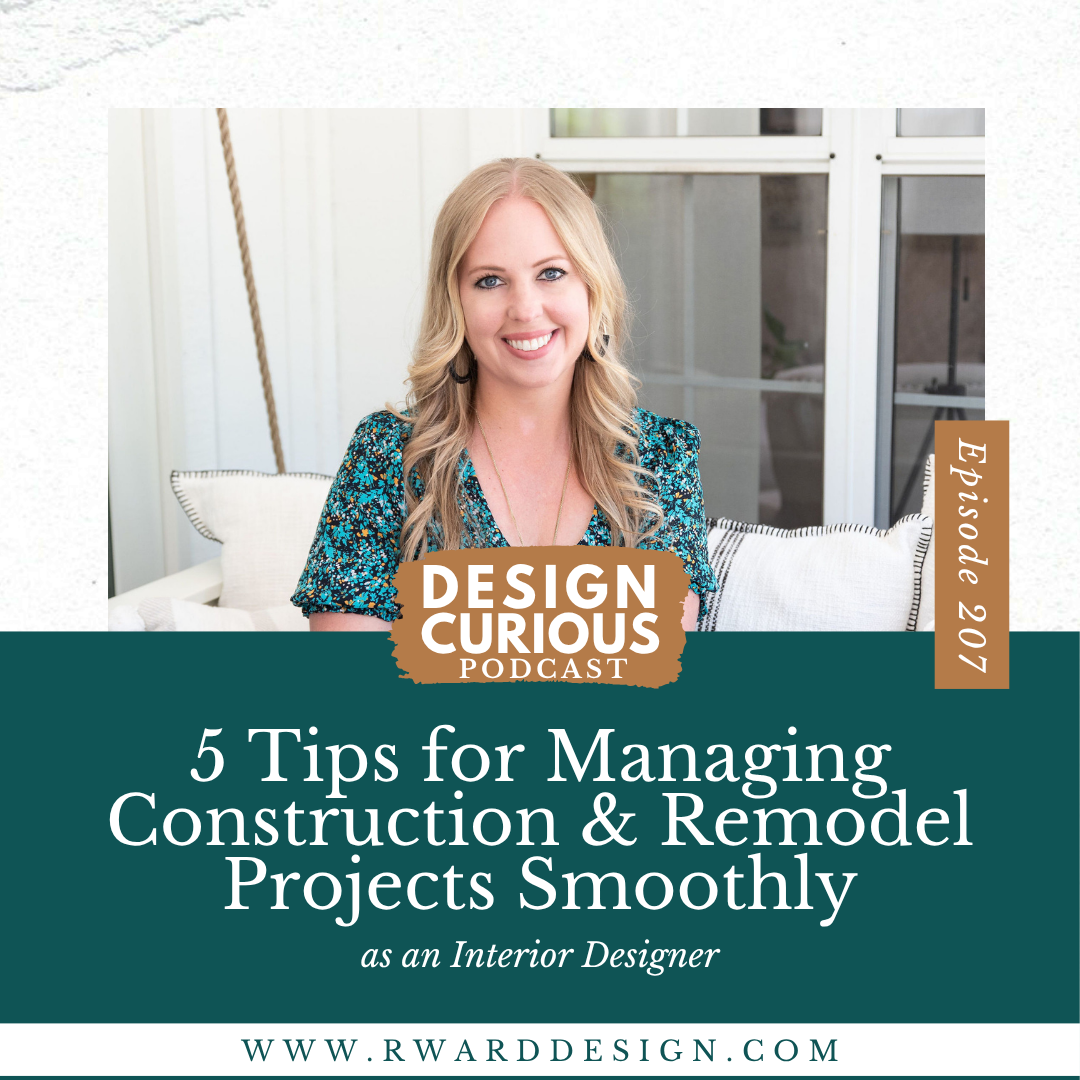
Construction and remodel projects can feel intimidating, especially when you’re a new interior designer approaching your first project.
You may be wondering how to work with contractors, who should handle permits and engineering, how to respond when a contractor pushes back on your design, or what happens when something unexpected appears after a wall is opened. These are all real concerns—and they’re exactly why understanding construction project management is such an important part of becoming a confident interior designer.
In this episode, I’m walking you through how I approach construction and remodel projects, from bringing contractors into the process early to defining responsibilities, managing site visits, documenting decisions, communicating with clients, and building strong relationships with your construction team. My goal is to help you approach construction projects with more confidence instead of fear—and become the project leader your clients need you to be.
What You’ll Learn in This Episode
Understand your role during construction and remodel projects
Bring contractors into the design process early
Define responsibilities before construction begins
Improve construction communication and document project decisions
Build stronger relationships with your A-list contractors
5 Practical Tips for Managing Construction and Remodel Projects Smoothly
Construction projects are much smoother when you stop thinking that you have to know everything and start thinking about how you can lead the team effectively. Here are the practices I use to keep remodel projects organized, realistic, and collaborative.
1. Bring Construction Expertise Into the Design Process Early
One of the biggest mistakes a new designer can make is getting too married to a design before understanding whether it is actually feasible. When I’m working on a remodel, we start with our measurements and as-built plans, then develop the design. Before I even show that design to the client, I often meet with the contractor on site to make sure it works.
This early construction collaboration can uncover hidden complexities before they become expensive problems. Maybe removing a wall requires a structural beam and engineering. Maybe an HVAC vent needs to be relocated. Maybe plumbing or another technical condition inside the wall affects the layout. These are things you may not immediately see because your primary focus is the aesthetics and function of the space.
You don’t have to pretend to be a contractor, architect, engineer, or codes expert. In fact, you shouldn’t. Your role is to know where your boundaries are and bring in the right person when you need that expertise. Having experienced professionals look at the project early helps with design feasibility, budgeting, pricing, and liability—and it can prevent you from designing something that ultimately has to be changed.
2. Define Everyone’s Role Before Construction Begins
Once the design is approved and you move into implementation and project management, you need clear boundaries around who is responsible for what. Before construction begins, I want to know who is pulling the permit, who is handling engineering or architectural work, who is ordering materials, who is receiving products, who is coordinating installation, and who is handling change orders.
For example, I may order plumbing, appliances, decorative lighting, and mirrors, while the contractor handles things like countertops, tile, paint, and rough-in materials. Sometimes there are exceptions, but the important thing is that we specify those responsibilities clearly. I actually put this information on our specification sheet so everyone knows who is purchasing what and what needs to arrive on site.
The same principle applies to permits and professional services. If an addition or change to the house is involved, I bring in an architect. For interior remodels, I may work with an engineer when engineering is required. Construction management becomes much easier when everyone understands their responsibilities before the first day of construction.
3. Be the Client’s Advocate While Respecting the Contractor’s Expertise
During construction, I see myself as the advocate for my client. I’m also there to make sure the design is being executed according to plan. I typically visit the job site once a week, if not more often, because questions always come up once the work is underway.
I want the contractor and tradespeople to be able to come to me with construction-related questions instead of constantly asking the homeowner for decisions they may not understand. If something is a personal preference that only the client can decide, I take it to the client. But for many construction decisions, I can act on their behalf and keep the project moving.
At the same time, construction collaboration requires respecting the contractor’s expertise. If a contractor sees a safety, code, budget, or feasibility issue I haven’t considered, I want to hear it. I’ll often ask, “What do you think?” because I value their experience. We can troubleshoot problems together and come up with the best solution for the client.
But collaboration does not mean designing by committee. You still need to protect the design intent. Every detail matters, and you shouldn’t abandon an important design element at the first objection. The goal is to use the expertise of the entire team to make the project better.
4. Create a Site Binder and Document Every Important Decision
Clear construction communication is one of the best ways to prevent confusion. I like to create a site binder using PowerPoint or Google Slides where everything is kept in one place. It includes plans, specification sheets, links, furniture plans, and other information the construction team needs.
I also like having a physical copy on site. Not everyone wants to look something up online, and sometimes you’re working in an area where you don’t have reliable internet access. A physical site binder gives the contractors and subcontractors an easy place to find the information they need.
I also document decisions throughout the project. I take progress photos and follow up site conversations with an email. If we decide to change something, I want a paper or digital trail showing what was discussed and what decision was made. Documenting decisions protects everyone, keeps the entire team informed, and gives you something to refer back to if there is ever confusion or pushback later.
5. Build Relationships With Contractors and Your A-List Team
One of the most important things I’ve learned is that a successful remodel isn’t one where everything goes perfectly. That’s not going to happen. You might open a wall and discover water damage. There might be asbestos that needs testing. A product may become unavailable. A substitution may be necessary. There will be delays and unexpected problems.
What makes a project run smoothly is having the right professionals involved, strong communication, clear responsibilities, and a team that knows how to solve problems together.
That’s why relationship building with contractors is such an important investment in your interior design career. Finding your A-list contractor may take some time. You may have to “kiss a few frogs.” Start by looking for contractors with strong reviews, then meet them in person. Have a coffee. Visit a job site. Learn how they communicate and how they work.
And remember: never throw your contractor under the bus in front of the client. If there’s a problem, talk about it privately and remain as professional as possible with the client. The design and construction industries can be small worlds, and your reputation matters. Some of my best projects have actually come through contractor referrals, so these relationships can become a valuable part of building your business.
Final Thoughts
Don’t shy away from construction projects just because they feel intimidating.
Remodels can be incredibly rewarding, and they allow you to create work that goes far beyond decorative features. You don’t lose authority by collaborating with other professionals—you become a stronger leader. When you know your role, respect the expertise of your team, communicate clearly, document decisions, protect the design, and approach problems together, you can lead a construction project with much more confidence.
A successful remodel isn’t one where everything goes perfectly; it’s one where the right professionals are involved, and everyone knows how to solve problems together.
Your Next Steps
Get the Remodel Survival Guide: a step-by-step process on the construction side of a remodel project
If you want me by your side while you work through your first construction projects, I’d love for you to join My Design Mentor. Having a mentor available when you’re facing contractor pushback, construction questions, or decisions you’ve never had to make before can give you the backbone and confidence you need to keep moving forward.

Check Out Our Spotify Playlist!



Free Webinar
- “From Passion to Profit”: Learn the 5 Money Moves to start your interior design business right
- Are You Ready to Start Your Interior Design Business? How to Know for Sure (and What It Really Costs to Launch)
Resources & Freebies
- Free webinar, “From Passion to Profit,” and learn the 5 Money Moves to start your interior design business right
- Your Roadmap to a Career in Interior Design
- Furnishings Investment Guide
- Remodel Budget and Timeline Guide
- 3 Things I Wish I had known when I Started my Career
- The best books every interior designer should have
Take a Quiz!
- Find Your Perfect Interior Design Style if you are curious about your design style
- Find Out What Type of Interior Designer You Should Be!
Let’s Connect!
- Email me at [email protected] if you have suggested topics
- DM me on Instagram at @rwarddesign if you have a burning question
Subscribe & Review!
If you love this episode, don’t forget to hit subscribe and leave me a rating & review! Click here.