
When you’re aspiring to become an interior designer or are just starting, it can be difficult to picture what the work really involves when you haven’t yet had much hands-on experience. You might have plenty of inspiration and ideas, but not know how to translate them into a room, experiment with different possibilities, or build confidence in your design decisions. But what if you didn’t have to wait for your first job or client to start learning? What if you could practice, explore your creativity, and develop your design skills along the way?
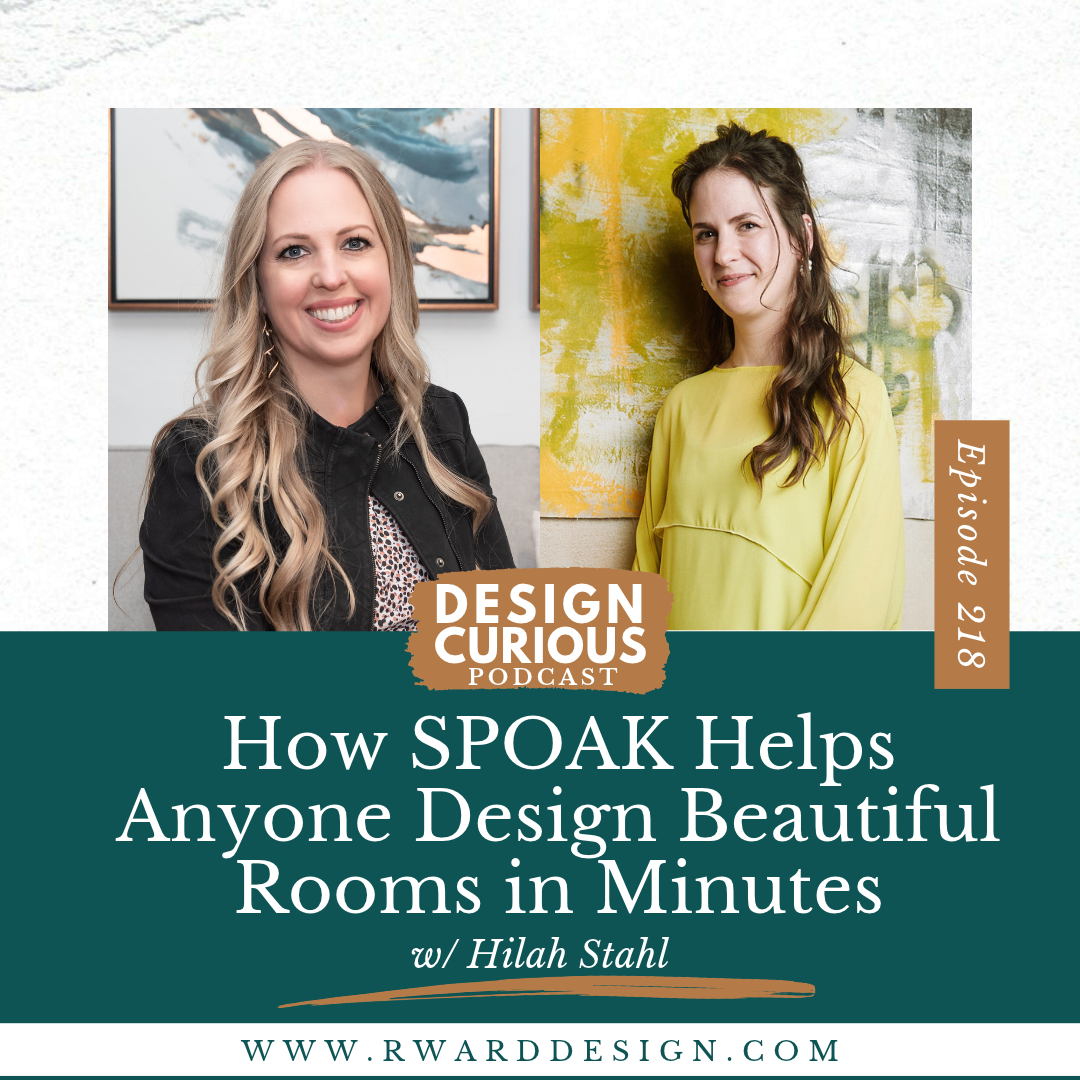
In this episode, I’m joined by Hilah Stahl, founder and CEO of Spoak, a digital studio designed for interior design lovers to practice their creativity and connect with others. Spoak brings together accessible digital design tools, including mockup mode, plan mode, and swatch tools, alongside a community where design enthusiasts and professional interior designers can share ideas, ask questions, get feedback, and learn from one another. Whether you’re an aspiring interior designer trying to develop your skills, a seasoned designer looking for practical visualization tools, or simply someone who loves making beautiful spaces, there’s something here to explore.
What I particularly love about this conversation is the idea that interior design doesn’t have to be reserved for professionals or treated as a finished product to consume. It can be an ongoing creative practice. If you’ve been waiting for permission to explore your creative side, this episode is your invitation to start practicing.
What You’ll Learn in This Episode
How Spoak makes interior design more accessible.
Three digital modes for visualizing interior spaces.
Why design practice matters more than finished results.
How AI can support creativity without replacing it.
Why community matters in the interior design industry.
Practical Ways to Approach Interior Design as an Ongoing Creative Practice
One of the most important takeaways from my conversation with Hilah is that interior design is not just about producing a beautiful final result. It’s about developing your eye, learning through experimentation, and enjoying the process of bringing ideas together.
Whether you’re considering a career in interior design or have been working with clients for years, here are some practical ways to approach design as a creative practice rather than simply another task to complete.
1. Move Beyond Inspiration and Start Experimenting With Your Ideas
Hilah shared something that really resonated with me. When she and her husband moved into their first grown-up apartment, she was surprised by how many places offered interior design inspiration but how few offered tools to actually execute those ideas.
You can find thousands of beautiful inspiration photos online, but looking at someone else’s finished room doesn’t necessarily teach you how to create your own. There’s a difference between consuming design and practicing design. One encourages you to admire what someone else has created; the other allows you to develop your own creative decisions.
I encourage you to start experimenting with the spaces around you. Try different furniture arrangements, explore color combinations, test out wallpaper, or see how different materials work together. You don’t have to wait until you have a client or an actual renovation project to start developing your design skills.
This is where accessible digital tools like Spoak become useful. They give you a place to explore your ideas, make adjustments, and visualize possibilities without immediately committing to purchasing furniture or making changes to a physical space.
Remember, you learn interior design by doing interior design. The more you experiment, the more confident you become in making creative decisions.
2. Use the Right Digital Design Tools to Explore Different Aspects of a Space
One of the things I appreciate about Spoak is that it recognizes interior design involves more than one kind of creative decision. Hilah explained that the platform has three design modes, each serving a different purpose.
Mockup Mode: Visualize the Overall Design
Mockup Mode is for creating visual representations of an interior space. You can work with actual products found online, using product pictures or links rather than being limited to a specific catalog. You can experiment with rugs, wallpaper, tile, upholstery, and architectural details.
I particularly like the flexibility this offers when you’re exploring different design directions. You can even create interactive options, allowing clients to toggle between different selections within one design rather than having to send multiple separate images.
For aspiring designers, this is a wonderful opportunity to practice visualizing spaces and communicating your ideas. For professional designers, it can make client presentations and design approvals much faster.
Plan Mode: Understand Layouts, Floor Plans, and Elevations
Plan Mode is an infinite, to-scale canvas that works with dimensioned assets. You can create your own floor plans and elevation assets or incorporate actual products with their dimensions.
Think of it as digital graph paper with measurements. While Mockup Mode focuses more on the visual appearance of the finished space, Plan Mode helps you understand the spatial and dimensional side of interior design.
This is especially useful when you’re learning to think beyond aesthetics and understand how furniture, dimensions, and layouts work together.
Swatch: Explore Color, Texture, and Materiality
The third tool is Swatch, which encourages you to think about the feel and atmosphere of a room before getting caught up in individual furniture selections.
Inspired by the idea of a vibe tray, this tool allows you to bring together paint colors, textures, and materials in a flat-lay format. It encourages you to consider how different elements relate to one another and how they contribute to the overall feeling of a space.
I love this because interior design isn’t simply about choosing a beautiful sofa or finding the perfect accessories. It’s about understanding color, texture, materiality, and the relationships between them.
Together, these three tools encourage a more complete design process, from developing a palette to planning a layout and visualizing the finished room.
3. Choose Tools That Encourage You to Learn, Not Just Produce Results
Hilah described Spoak‘s approach as having a “low floor with a high ceiling.” In other words, the platform should be easy enough for someone with little design experience to enjoy, while still offering enough capabilities for professional designers to create impressive work.
This is an important consideration when choosing digital tools for your interior design journey.
When you’re starting out, you don’t necessarily need complicated software with hundreds of advanced features. You need something that allows you to explore ideas, practice your skills, and build confidence without becoming overwhelmed by the technology itself.
Hilah also explained that some professional designers use Spoak alongside more advanced programs like AutoCAD or SketchUp. For example, they might use Spoak to create a quick client presentation that communicates their vision, then turn to more technical software when working with architects, subcontractors, or custom furniture requirements.
The lesson here is that one tool doesn’t have to do everything.
As you develop your interior design career, learn to identify which tools support which parts of your workflow. Choose software that helps you communicate your ideas, work efficiently, and serve your clients well. Your digital toolkit should support your creative process, not become another obstacle to getting the work done.
4. Let AI Improve Productivity Without Taking Away Your Creativity
We also had an important conversation about artificial intelligence and its place in interior design.
Hilah explained that Spoak has a very intentional approach to AI. Rather than allowing AI to make creative decisions for users, the platform uses it to make certain tasks faster.
For example, when using the upholstery feature, you still choose the furniture and fabric. AI simply helps apply the fabric to the furniture without requiring you to do all the detailed masking and editing manually.
Another feature, Magic Render, takes a design created in Spoak and transforms it into a photorealistic image. The original creative direction still comes from the designer.
I think this distinction is worth considering as we navigate the growing number of AI productivity tools available to interior designers.
Technology can help us save time on repetitive tasks, streamline our design process, and communicate ideas more efficiently. But the creative decisions, the understanding of a client’s needs, and the personal perspective we bring to a project are still incredibly valuable.
As Hilah pointed out, there’s a difference between treating interior design as a task to outsource and treating it as an art form you personally enjoy creating.
Don’t let technology take away the very part of your work that makes you love design. Use it to give yourself more time and freedom to create.
5. Find Your Creative Community and Make Room for Connection
One of my favorite parts of this conversation was hearing Hilah talk about the Spoak community.
Interior design can be a surprisingly lonely industry, especially when you’re running your own business. Many designers are solopreneurs, which means they’re responsible for finding clients, managing projects, making decisions, and handling all the details of running a business.
It’s easy to feel as though you’re working in isolation or competing with everyone around you.
But Hilah discovered that people who share a passion for interior design are naturally drawn to connecting with one another. The Spoak community provides a place for members to ask for design advice, share inspiration, discuss challenges, and simply connect with people who understand their interests.
There’s also a trade-only community space where professional designers can exchange ideas and support one another.
I believe this kind of peer connection is valuable at every stage of your career. If you’re an aspiring designer, being around people who share your interests can encourage you to keep learning and experimenting. If you’re an established designer, having colleagues to bounce ideas off can help you feel less isolated and more supported.
And remember, you don’t have to turn every creative interest into a full-time career. Hilah highlighted an often-overlooked group of people who fall somewhere between amateur and professional. Some design for friends, some take on side projects, and others simply enjoy creating beautiful spaces.
There’s room for all of that. Your relationship with interior design can evolve in different ways, and you don’t have to fit into one particular category to belong.
Final Thoughts
Interior design is something you can continue practicing and enjoying throughout your life. You don’t have to wait until you have a degree, a client, or a fully established business to start exploring your creativity. And if you’re already a professional, you don’t have to stop experimenting just because design has become your everyday work. Find tools that make the process easier, connect with people who share your passion, and give yourself permission to play with ideas. Whether you’re designing for a client, helping a friend, or simply making your own home more beautiful, keep making room for creativity. That’s how you continue to grow as a designer.
Meet Hilah Stahl
Hilah Stahl is the co-founder and CEO of Spoak, a digital studio for interior design lovers to practice their creativity and connect with a community of like-minded people. With a background in technology, strategy, and business leadership, Hilah brings together her analytical experience and lifelong passion for design to make interior design more accessible to both enthusiasts and professionals. She believes design should be a creative practice rather than something people simply consume or outsource. Through Spoak, she is creating a space where people can experiment with digital design tools, develop their skills, and connect with others who share their passion. Hilah was named to Inc.’s Female Founders 250 in 2024. She lives on a farm in the Hudson Valley with her husband and two young daughters and publishes a weekly Substack newsletter with 50,000 readers.
Connect With Hilah Stahl
Website: Spoak
Instagram: @spoak
Substack:@hilahsthings
Your Next Steps
If you’re ready to build the foundations of your own interior design business, Launch Your Business Bootcamp is for you! Doors are scheduled to open on December 1, and you can get on the waitlist now so you’re ready to begin your bootcamp assignments and start putting the pieces of your business together.
Join the waitlist now 👉 https://rwarddesign.myflodesk.com/launch-your-business-bootcamp

Check Out Our Spotify Playlist!
Free Webinar
- “From Passion to Profit”: Learn the 5 Money Moves to start your interior design business right
- Are You Ready to Start Your Interior Design Business? How to Know for Sure (and What It Really Costs to Launch)
Resources & Freebies
- Your Roadmap to a Career in Interior Design
- Furnishings Investment Guide
- Remodel Budget and Timeline Guide
- 3 Things I Wish I had known when I Started my Career
- The best books every interior designer should have
Take a Quiz!
- Find Your Perfect Interior Design Style if you are curious about your design style
- Find Out What Type of Interior Designer You Should Be!
Let’s Connect!
- Email me at [email protected] if you have suggested topics
- DM me on Instagram at @rwarddesign if you have a burning question
Subscribe & Review!
If you love this episode, don’t forget to hit subscribe and leave me a rating & review! Click here.