
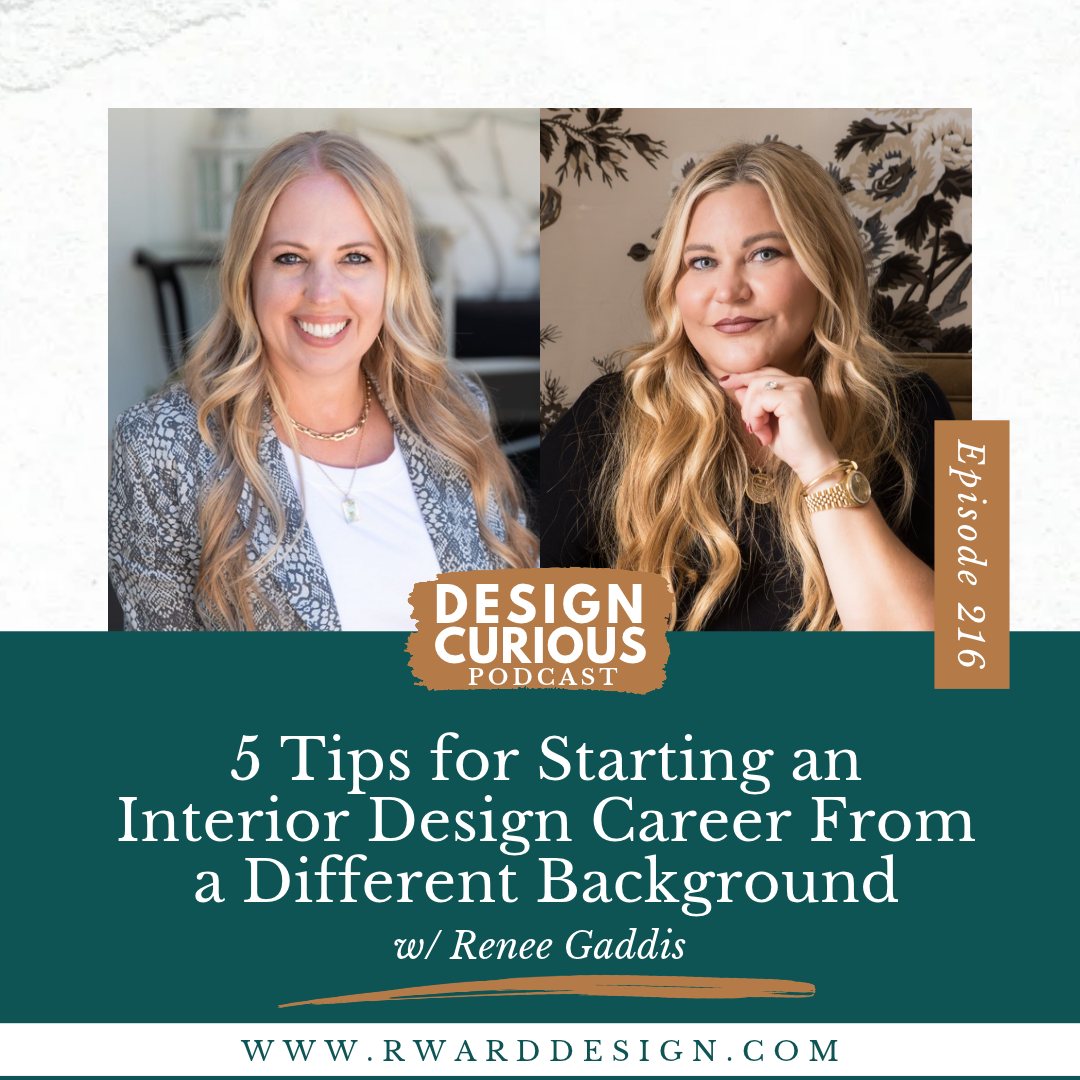
Have you ever dreamed of becoming an interior designer but worried that your educational background, previous career, or lack of industry experience might hold you back? Perhaps you studied fashion, art, business, or something completely unrelated to interior design. You love beautiful spaces, have a natural eye for color and texture, and can spend hours imagining how a room could be transformed. But how do you turn that passion into a career? And where do you begin when you don’t have a traditional interior design background?
In this episode, I’m talking with Renee Gaddis, a highly sought-after interior designer in Naples, Florida, whose career proves that there’s more than one way to enter this creative profession. Renee studied apparel merchandising, design, and production before moving to Florida with her husband. When she couldn’t find work in fashion, a conversation with an interior designer opened her eyes to the possibility of applying her existing skills to a different industry. That conversation led to a 13-year career with an established design firm, further education, professional certification, and eventually the launch of her own interior design business.
Renee’s story proves that you don’t necessarily have to start from scratch to become an interior designer. Your previous experience may give you valuable skills you can transfer into interior design, whether that’s understanding textiles, recognizing color relationships, communicating visually, or working with clients. You’ll also hear why learning the technical side of design, seeking out experienced mentors, and building strong professional relationships can help you grow into the career. If you’re considering a career change into interior design, Renee’s journey offers a realistic, encouraging look at how to take those first steps—and why you should understand the demands of the profession before taking the leap.
What You’ll Learn in This Episode
How to transfer fashion skills into interior design
Why technical design knowledge matters beyond aesthetics
How mentorship can open doors to new opportunities
Why professional relationships help build a design business
What aspiring interior designers should know before starting
How to Build an Interior Design Career From a Different Background
One thing I love about speaking with designers like Renee is discovering how different their career journeys can be. We sometimes assume that becoming an interior designer means following one prescribed educational route, but Renee’s experience shows us that your path can look very different.
Here are five lessons to consider if you’re exploring a career change into interior design.
1. Recognize the Transferable Skills You Already Have
Renee didn’t initially study interior design. She studied apparel merchandising, design, and production, expecting to work in the fashion industry. When she moved to Florida and struggled to find a job in fashion, she began to reconsider her options.
The turning point came when she spoke with a friend who worked as an interior designer. Her friend explained that many of the skills Renee learned in fashion could be applied to interiors. Her understanding of fabrics, how materials hang and drape, their durability, and the details of seams and stitching all had a place in residential interior design.
If you’re considering entering this industry, you may already have skills that are valuable in interior design, even if you haven’t studied it formally. Look at what you’ve learned through your education, previous employment, hobbies, or other creative pursuits. Could your knowledge of materials, visual communication, customer service, or project coordination be relevant?
You don’t need to dismiss your previous career to pursue a new one. Instead, identify what you can bring and where you need to develop additional expertise.
2. Find an Opportunity to Learn From Experienced Designers
Renee’s conversation with her friend didn’t just introduce her to a new career possibility. It led to an interview at the design firm where her friend worked. Renee spent the next 13 years there, gaining practical experience and learning how the industry operates.
That experience matters because interior design involves much more than choosing colors, furniture, fabrics, and accessories. It requires an understanding of clients’ needs, space planning, construction processes, materials, project coordination, and the many details that bring a design concept to life.
If you’re starting, look for opportunities to work alongside experienced interior designers. An entry-level position, an assistant role, or a position within a design firm may help you understand the profession in a real-world setting. You’ll learn how projects move from an initial concept to completion, how designers work with vendors and contractors, and how client expectations are managed.
Renee’s story is a reminder that you don’t have to know everything before you begin. Find an environment where you can ask questions, observe how professionals work, and build your skills through experience.
3. Invest in the Technical Side of Interior Design
Renee initially felt most comfortable working with textiles. She enjoyed creating custom pillows, illustrating drapery, and developing bedding designs. Those were natural extensions of her fashion education.
But as she gained experience, she discovered a passion for the technical side of interior design, particularly space planning, architectural details, and construction. She took additional courses to deepen her understanding of architecture, construction, and accessibility requirements. She also pursued the NCIDQ examination to support her professional qualifications.
This is an important lesson for anyone entering the industry from a different background. Your existing strengths may help you get started, but you should also identify the areas where you need more knowledge.
If you have a strong aesthetic eye, develop your technical understanding of floor plans, building drawings, construction documentation, and the practical limitations of a space.
If you’re more comfortable with technical work, strengthen your understanding of color, materials, furniture selection, and the visual elements that shape a client’s experience.
Renee developed her technical expertise through additional education and firsthand experience on construction sites. Her journey shows that learning doesn’t stop when you enter the profession. Be willing to study, ask questions, and develop the skills that help you become a more capable designer.
4. Build Relationships That Help You Grow
When Renee eventually launched her own interior design business, she didn’t begin with a large office or an extensive team. She started with $10,000, worked out of her car, and used a friend’s warehouse to receive products.
What she did have was a network of people who knew her work and believed in her. She built relationships with clients, realtors, developers, and vendors throughout her career. Those connections helped her establish her business and access better purchasing opportunities.
Today, Renee says that much of her work comes from referrals and repeat clients. She considers it a tremendous compliment when clients return for another project.
Aspiring interior designers, pay attention to this: Networking isn’t simply about collecting contacts or promoting yourself. It’s about building genuine professional relationships, delivering a positive client experience, and becoming someone people feel confident recommending.
As you begin your career, get to know other designers, suppliers, contractors, real estate professionals, and potential mentors. Be curious, follow through on commitments, and treat every working relationship with care. Those connections may open doors you couldn’t have anticipated when you started.
5. Understand the Reality of the Profession Before You Commit
Renee offered a particularly valuable reminder for anyone considering a career in interior design: the work is much harder than many people realize.
From the outside, interior design can look like a glamorous career filled with beautiful fabrics, stylish furniture, and exciting transformations. But the reality also includes detailed planning, demanding client service, construction challenges, problem-solving, scheduling, and the responsibility of managing projects from beginning to end.
Renee enjoys the construction process, including the challenge of renovating condominiums within strict seasonal timeframes. These projects require careful planning around existing plumbing, structural limitations, demolition, and rebuilding. The creative vision must work within the practical realities of the building.
She also explained that managing a growing design team has been one of her biggest challenges. As a business owner, she needs to balance her love of designing with communication, time management, and leadership.
So, before you make the transition, take time to understand the profession. Speak with working interior designers, learn about the day-to-day responsibilities, and consider whether you enjoy both the creative and practical sides of the work. Interior design can be deeply rewarding, but realistic expectations will help you make a more informed decision about your future.
Final Thoughts: You Don’t Have to Follow Someone Else’s Path
Renee’s journey reminds me that there isn’t just one way to become an interior designer. She entered the industry with a fashion background, learned through years of professional experience, invested in technical education, and eventually built a successful business of her own.
If you’re considering a career change, don’t assume that your previous education or work experience disqualifies you. Start by recognizing the skills you already have, then identify what you need to learn. Seek guidance from people who understand the industry, and give yourself permission to grow into the designer you want to become. Most importantly, remember that interior design is both a creative craft and a service profession. The more clearly you understand what the work involves, the better prepared you’ll be to build a career that you genuinely love.
Meet Renee Gaddis
Renee Gaddis is an accomplished interior designer based in Naples, Florida, whose residential design work spans projects across the United States, from Rhode Island to Chicago. Originally trained in apparel merchandising, design, and production, Renee transitioned into interior design after discovering how her knowledge of textiles, color, and materials could be applied to creating beautiful, functional spaces. After spending 13 years working at an established design firm, she pursued further education and professional qualifications before launching her own interior design company. Known for an aesthetic that goes beyond traditional coastal design, Renee combines a distinctive sense of style with a strong interest in space planning, construction, and technical design. Her work includes condominium renovations and new-build homes, and she is passionate about creating comfortable, thoughtfully designed environments that support her clients’ well-being.
Connect With Renee Gaddis
Website: Renee Gaddis
Instagram: @reneegaddisinteriors
Your Next Steps
If you’re serious about building your interior design career or growing your interior design business, you don’t have to figure everything out alone.
My Design Mentor is designed to give you the support, education, and community you need to keep moving forward. Inside, you’ll find 12 learning modules, a book club, special projects, a community of designers for feedback, and monthly one-on-one coaching calls with me where we can focus on the specific challenges you’re facing in your career.
Join My Design Mentor and let’s build your design career together.

Check Out Our Spotify Playlist!
Free Webinar
- “From Passion to Profit”: Learn the 5 Money Moves to start your interior design business right
- Are You Ready to Start Your Interior Design Business? How to Know for Sure (and What It Really Costs to Launch)
Resources & Freebies
- Your Roadmap to a Career in Interior Design
- Furnishings Investment Guide
- Remodel Budget and Timeline Guide
- 3 Things I Wish I had known when I Started my Career
- The best books every interior designer should have
Take a Quiz!
- Find Your Perfect Interior Design Style if you are curious about your design style
- Find Out What Type of Interior Designer You Should Be!
Let’s Connect!
- Email me at [email protected] if you have suggested topics
- DM me on Instagram at @rwarddesign if you have a burning question
Subscribe & Review!
If you love this episode, don’t forget to hit subscribe and leave me a rating & review! Click here.