

If you’re an interior designer trying to build a business, you’ve probably heard that you need a strong brand. But what does that actually mean? Is it your logo? Your color palette? The beautiful images on your website? While all of those things can help identify your brand, they aren’t what makes your business different.
The more important question is: Why should a potential client choose you over another interior designer? When designers look similar from the outside, clients can easily start comparing portfolios, services, and—eventually—prices. That can make it incredibly difficult for a small business or solopreneur to establish a competitive advantage.
In this episode, I talk with Jon Czeranna, co-founder of Wit & Craft and creator of the Brand Lab, about brand positioning for small businesses and interior designers. Jon shares a structured positioning framework that helps you identify your competition, uncover market gaps, understand your ideal client, articulate what makes your business unique, and build a brand story around that difference.
And if you’re a newer designer without a large portfolio, Jon shares something that can help you build your online presence right away.
What You’ll Learn in This Episode
Why your brand is more than visual identity
How to identify gaps in your marketplace
How to define your ideal client profile
How to articulate your unique positioning
How to build an online presence without experience
Foundation for Building Your Interior Design Brand
Branding can feel overwhelming when you’re starting an interior design business. Websites, logos, photography, social media, marketing, messaging, and so many other pieces compete for your attention.
But Jon’s approach reminded me that there’s a logical order to this. Before you worry about making your business look different, you need to understand what makes the business different.
Here are some of the strategies Jon shared:
1. Analyze the Competition
When you’re starting a design business, it’s tempting to begin with the visual pieces of branding. You might choose a logo, find a color palette, create a beautiful website template, and start posting on Instagram.
But Jon suggests starting somewhere much more strategic: look at your competition.
The reason is simple. Interior design is a crowded marketplace, and from a potential client’s perspective, many designers can begin to look and sound alike. By studying your competitors, you can identify the gaps in the market.
Then compare those gaps with your strengths, experiences, philosophy, and approach. That gives you an opportunity to find a position where you aren’t simply another alternative in a crowded field.
Instead of asking, “How can I make my brand look better?” start asking, “Where is there an opportunity for me to be different?”
2. Find Your “Only” Position
One of the most powerful exercises Jon shared is what he calls the “only statement.”
The exercise is to complete this sentence:
“We are the only interior design company that does X for Y people.”
It sounds simple, but Jon explained that this can be one of the hardest exercises for business owners because it requires you to believe that it’s actually possible to own a distinct position.
This is where your brand positioning starts to become more than a marketing exercise. You’re looking for your own “island of one” in what Jon described as a “sea of sameness.”
That doesn’t mean inventing something completely new. It means uncovering the combination of strengths, experiences, process, philosophy, client needs, and outcomes that make your business uniquely yours.
Your competitive advantage may already be there. Your job is to uncover it, articulate it, and communicate it consistently.
3. Build Your Online Presence Even If You Don’t Have a Huge Portfolio
This was one of my favorite parts of our conversation because I know how many newer designers struggle with this.
What do you put on your website when you don’t have years of completed projects to showcase?
Jon’s answer was simple: talk about what you do, not only what you’ve done.
You have a philosophy. You have a process. You have a system for working with clients. You have a particular way of approaching design and a particular journey you want your clients to experience.
Those things can become part of your website content and brand messaging.
Instead of waiting until you have a huge portfolio, start articulating your design philosophy and the experience you want to create for your clients. Explain how you think. Talk about what you believe. Describe the journey you take clients through and what you want them to think and feel along the way.
That gives potential clients something to connect with beyond photographs of finished rooms.
4. Get Clear on Your Ideal Client Profile
Your positioning doesn’t exist in a vacuum. It needs to connect with the people you actually want to serve.
That’s why Jon puts so much emphasis on the ideal client profile (ICP).
If you’ve already worked with clients, one useful place to start is by looking at your happiest customers. Think about the projects where the relationship felt energizing, collaborative, and enjoyable.
Ask yourself these…
What made those clients such a good fit?
What did they value?
What were they open to?
What did you do particularly well together?
What parts of the process created the best experience?
Those answers can help you identify patterns in the clients you want to attract more of.
When your brand strategy becomes clearer about who you serve, your messaging becomes clearer too. You’re no longer trying to speak to everyone. You’re speaking directly to the people who are most likely to value what you do.
5. Build Your Brand Voice From Your Own Experiences
We also talked about AI and the danger of creating content that sounds just like everyone else’s.
Jon’s perspective was that your positioning provides the context AI needs to create content that is actually connected to your business. Your brand voice, brand story, experiences, and messaging give the technology something unique to work with.
One idea I particularly loved was his suggestion to capture your experiences in real time.
When something happens during a client project, when you solve a problem, when you have an interesting conversation, or when you learn something about your design process, write it down. Keep a record of those experiences.
Those real experiences are ownable. Nobody else has lived them exactly as you have.
That means they can become the raw material for your marketing, website copy, social media content, email newsletters, and brand storytelling—while helping you maintain a brand voice that actually sounds like you.
Final Thoughts
Branding is the long game. You don’t build a brand by creating a logo and checking it off your list. You build it by establishing a strong positioning foundation and then consistently communicating that position over the lifetime of your business.
Before you worry about looking different, get clear about why someone should choose you. Your design skills matter, but so does your ability to communicate the unique value, experience, philosophy, and outcome you bring to your ideal clients.
Meet Jon Czeranna
Jon Czeranna is the co-founder of Wit & Craft and creator of the Brand Lab. With more than 20 years of experience in advertising, branding, and graphic design, Jon focuses on helping small businesses and solopreneurs uncover and articulate their competitive advantage. Through the Brand Lab, he teaches entrepreneurs how to approach brand positioning, ideal client profiles, brand stories, messaging, and brand voice so they can better connect with customers, differentiate themselves from competitors, and build a stronger foundation for business growth.
Connect With Jon Czeranna
Your Next Steps
If you’re serious about building your interior design career or growing your interior design business, you don’t have to figure everything out alone.
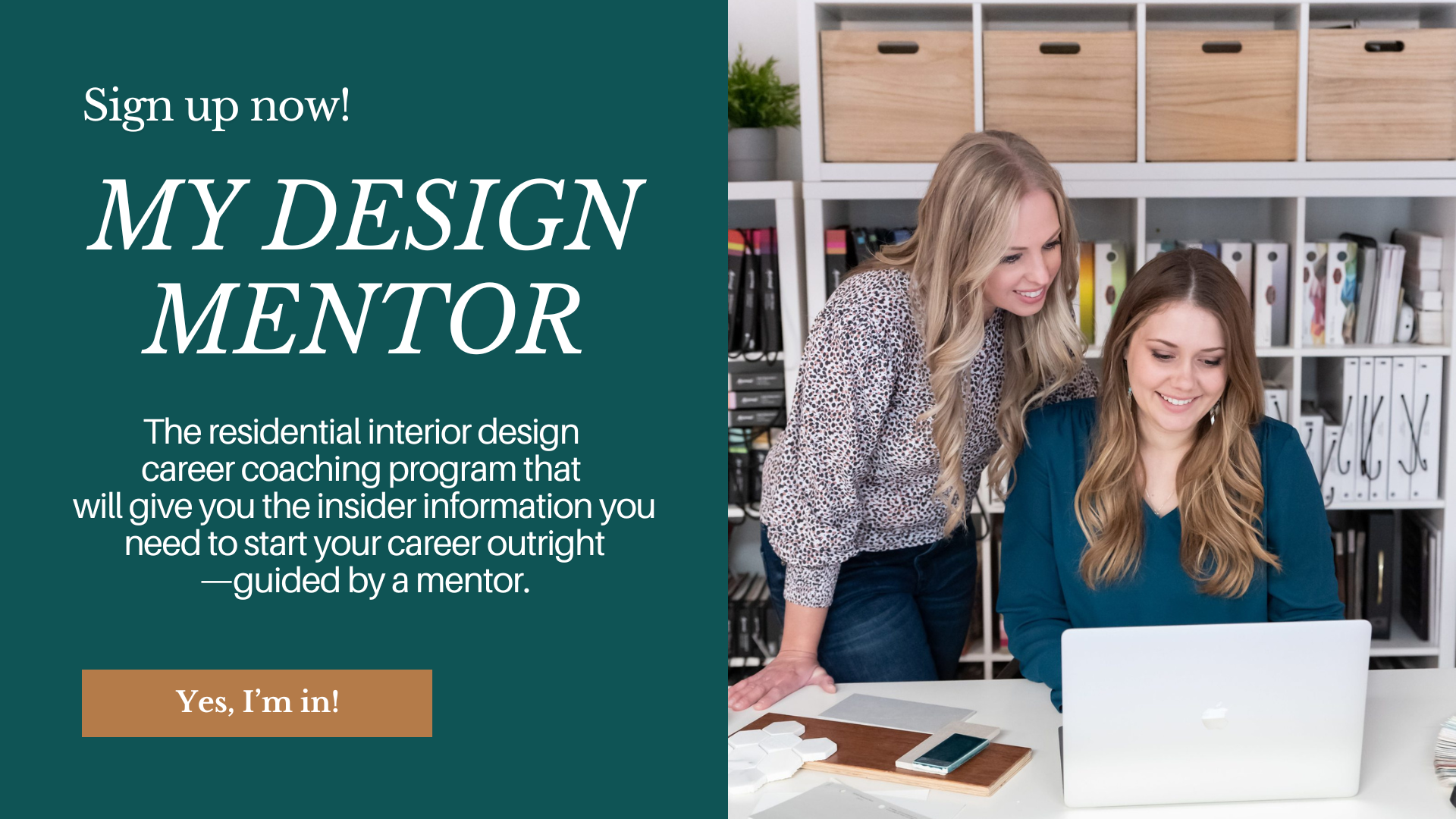
My Design Mentor is designed to give you the support, education, and community you need to keep moving forward. Inside, you’ll find 12 learning modules, a book club, special projects, a community of designers for feedback, and monthly one-on-one coaching calls with me where we can focus on the specific challenges you’re facing in your career.
Join My Design Mentor and let’s build your design career together.
Check Out Our Spotify Playlist!
Free Webinar
- “From Passion to Profit”: Learn the 5 Money Moves to start your interior design business right
- Are You Ready to Start Your Interior Design Business? How to Know for Sure (and What It Really Costs to Launch)
Resources & Freebies
- Your Roadmap to a Career in Interior Design
- Furnishings Investment Guide
- Remodel Budget and Timeline Guide
- 3 Things I Wish I had known when I Started my Career
- The best books every interior designer should have
Take a Quiz!
- Find Your Perfect Interior Design Style if you are curious about your design style
- Find Out What Type of Interior Designer You Should Be!
Let’s Connect!
- Email me at [email protected] if you have suggested topics
- DM me on Instagram at @rwarddesign if you have a burning question
Subscribe & Review!
If you love this episode, don’t forget to hit subscribe and leave me a rating & review! Click here.