
As interior designers, we often focus on creating beautiful spaces, but beauty alone isn’t always enough. Sometimes a room can have gorgeous furnishings, meaningful décor, and impeccable styling, yet still feel visually loud. When every surface competes for attention, a home stops supporting everyday life and starts demanding energy from the people living in it.
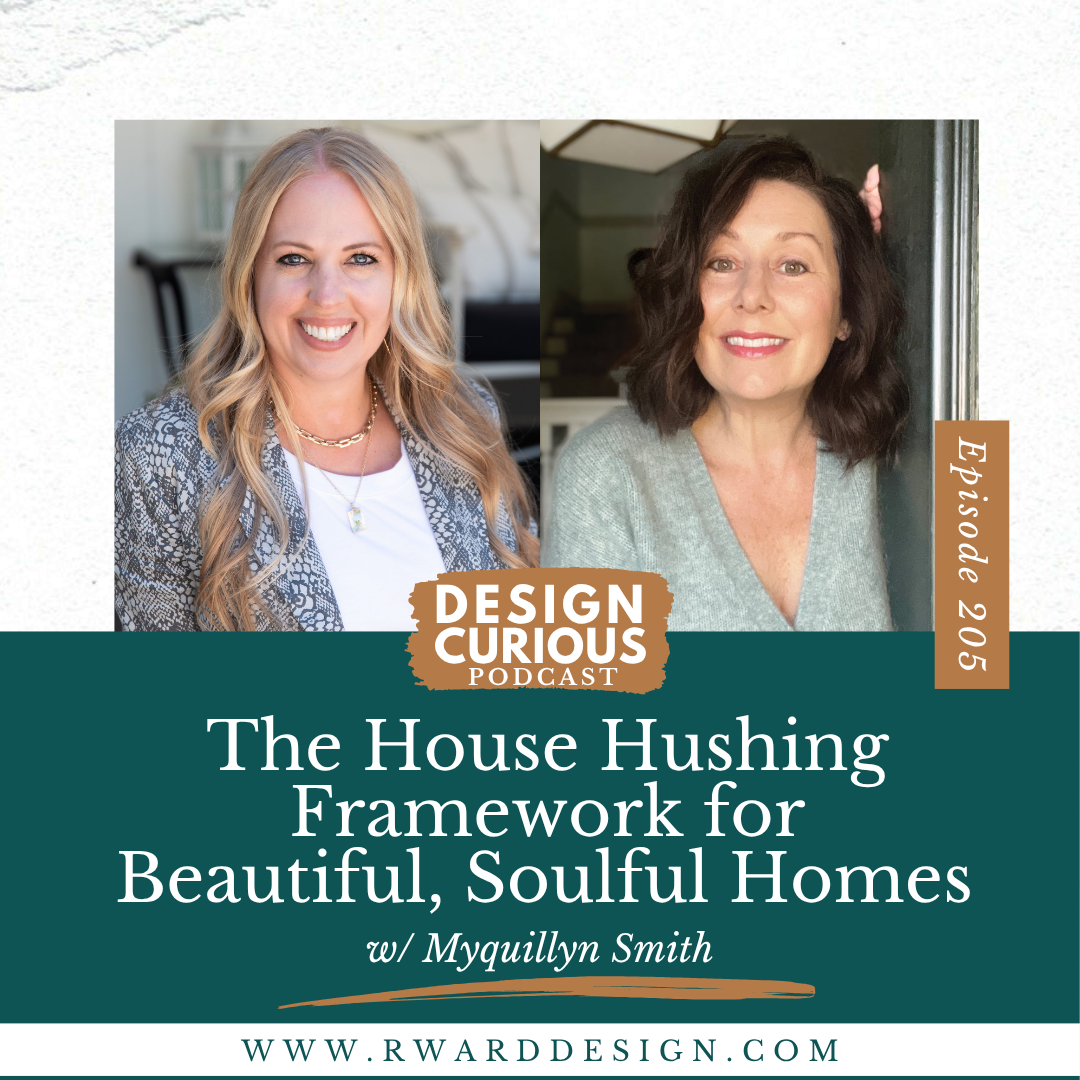
That’s why I was so excited to sit down with bestselling author Myquillyn Smith, better known as The Nester, to talk about her newest book, House Hushing. Rather than encouraging us to simply own fewer things, Myquillyn introduces a refreshing perspective: great design is about managing visual volume, not just the volume of possessions. Her approach blends interior design, decluttering, quiet decorating, soulful styling, and seasonal simplicity into a practical framework that helps create homes that feel both peaceful and deeply personal.
If you’re designing for clients—or even creating a home for yourself—this episode will encourage you to think beyond minimalism. You’ll discover how thoughtful design decisions can reduce visual noise while preserving warmth, personality, and the lived-in beauty that makes a house truly feel like home.
What You’ll Learn in This Episode
Understand the four-part House Hushing framework.
Reduce visual noise without sacrificing personality.
Style meaningful homes with fewer decorative items.
Create peaceful interiors through quiet decorating.
Design homes supporting changing life seasons.
The Four Principles of House Hushing
Beautiful interiors should do more than impress people—they should support real life. Throughout my conversation with Myquillyn, one message kept surfacing: the goal isn’t to remove personality from a home. Instead, it’s to reduce the visual competition that prevents us from enjoying the things we truly love.
As interior designers, we often help clients choose furniture, finishes, colors, and décor. But Myquillyn reminds us that one of our greatest gifts is helping people experience peace in their homes. Her House Hushing framework offers a practical way to accomplish exactly that.
1. Start with Backwards Decluttering Instead of Difficult Decisions
Traditional decluttering asks us to examine every object one at a time and decide whether it deserves to stay. For many people—especially those who love decorating—that process feels exhausting and emotionally draining.
Myquillyn flips the process completely.
Instead of making hundreds of decisions first, she temporarily removes the decorative layers from one room so you can experience what the space feels like with less visual distraction. Furniture, rugs, artwork, and functional pieces remain, while baskets, accessories, books, pillows, décor, and everyday visual clutter are temporarily moved elsewhere for a day or two.
This simple experiment allows you to experience the benefits of decluttering before making permanent choices.
As she explains,
“It allows you to reap the rewards of decluttering without having to make any decisions first.”
For interior designers, this is an incredibly practical exercise to recommend to clients who feel overwhelmed by editing their belongings. Rather than asking what should leave the room, we first allow them to experience what the room feels like when it can finally breathe.
That emotional shift often makes the next design decisions much easier.
2. Quiet Decorating Means Designing for Visual Volume
One of my favorite insights from this conversation is that design isn’t only about how much stuff a room contains—it is also about how visually busy the room feels.
When Myquillyn moved into her historic Victorian home, she quickly realized the house itself created visual noise. The wallpaper, intricate millwork, fireplaces, built-ins, bold patterns, and architectural details all competed for attention before a single decorative object was added.
That experience changed the way she approached decorating.
Instead of stripping away the home’s personality, she learned how to gently reduce its visual intensity through thoughtful design choices involving color, pattern, scale, texture, and balance.
As she explains,
“You need to be able to turn down the visual volume.”
This distinction is especially valuable for interior designers.
A room doesn’t necessarily feel calmer because it contains fewer items. Sometimes thoughtfully repeating one color, simplifying patterns, softening contrasts, or allowing architectural details to stand on their own creates a much greater sense of peace than simply removing décor.
It’s a reminder that great interior design isn’t measured by minimalism—it is measured by how intentionally every visual element works together.
3. Soulful Styling Creates Homes That Tell Your Story
One of the most refreshing parts of Myquillyn’s philosophy is that House Hushing is never about creating sterile or impersonal interiors.
Instead, she encourages homeowners to decorate first with the things that carry meaning.
Letters from loved ones.
Family photographs.
Collected treasures.
Travel memories.
Objects connected to the life they’re building—not simply items purchased to fill empty shelves. She describes this as soulful styling, encouraging us to prioritize meaningful belongings before reaching for trendy accessories.
As designers, it’s easy to become focused on creating beautiful vignettes. But this conversation challenged me to remember that our clients don’t simply want attractive rooms—they want homes that feel unmistakably like theirs.
When meaningful pieces are given room to shine instead of competing with excessive decoration, the entire home becomes more authentic, welcoming, and emotionally rich.
4. Living Seasonally Helps Homes Support Real Life
Perhaps the most overlooked part of Myquillyn’s framework is recognizing that our homes should evolve alongside our lives.
House Hushing isn’t something we complete once and forget.
Instead, it’s an ongoing conversation with our homes.
Whether someone is welcoming a baby, sending a child to college, caring for aging parents, moving into a historical home, or simply entering a different season of life, the home’s needs naturally change as well. Myquillyn encourages homeowners to intentionally consider what each season requires and adjust their spaces accordingly rather than expecting every room to function exactly as it did last year.
This perspective is especially valuable for interior designers because it shifts our role from creating “finished” spaces to creating adaptable ones.
Rather than designing homes that look perfect for a magazine photo, we can design homes that continue supporting our clients through every season of real life.
And perhaps my favorite reminder from Myquillyn is this:
“We all end up realizing that we can have the styled, beautiful home that we want with a lot less stuff.”
That simple truth perfectly captures the heart of House Hushing. Beautiful design isn’t about deprivation. It’s about giving beauty enough room to breathe.
Final Thoughts
Creating a beautiful home isn’t about achieving perfection—it’s about creating peace.
As interior designers, we naturally want our spaces to be visually inspiring, but beauty should never come at the expense of livability. A well-designed home should make everyday routines feel easier, quieter, and more enjoyable.
House Hushing reminds us that thoughtful design isn’t measured by how much we add to a room, but by how intentionally we manage its visual volume. When we reduce visual noise while preserving personality, we create homes that are not only beautiful to look at but also supportive of the people who live in them. That’s the kind of design I hope we continue to create—for ourselves and for every client we serve.
Meet Myquillyn Smith
Myquillyn Smith, also known as The Nester, is a New York Times and Wall Street Journal bestselling author, decorating expert, and founder of The Nester. For more than fifteen years, she has encouraged homeowners to embrace their homes—imperfections and all—by creating spaces that reflect their personalities instead of chasing perfection. Her thoughtful approach combines decorating, styling, decluttering, and intentional living, helping thousands of women create welcoming homes with less stress and more meaning. Living in a historic Victorian home in North Carolina has further shaped her philosophy, inspiring her latest book, House Hushing, which introduces a fresh framework for reducing visual noise while maintaining warmth, beauty, and soul.
Connect With Myquillyn Smith
Website: The Nester
Instagram: @thenester
Book: House Hushing
Your Next Steps

Check Out Our Spotify Playlist!



Resources & Freebies
- Free webinar, “From Passion to Profit,” and learn the 5 Money Moves to start your interior design business right
- Your Roadmap to a Career in Interior Design
- Furnishings Investment Guide
- Remodel Budget and Timeline Guide
- 3 Things I Wish I had known when I Started my Career
- The best books every interior designer should have
Take a Quiz!
- Find Your Perfect Interior Design Style if you are curious about your design style
- Find Out What Type of Interior Designer You Should Be!
Let’s Connect!
- Email me at [email protected] if you have suggested topics
- DM me on Instagram at @rwarddesign if you have a burning question
Subscribe & Review!
If you love this episode, don’t forget to hit subscribe and leave me a rating & review! Click here.